
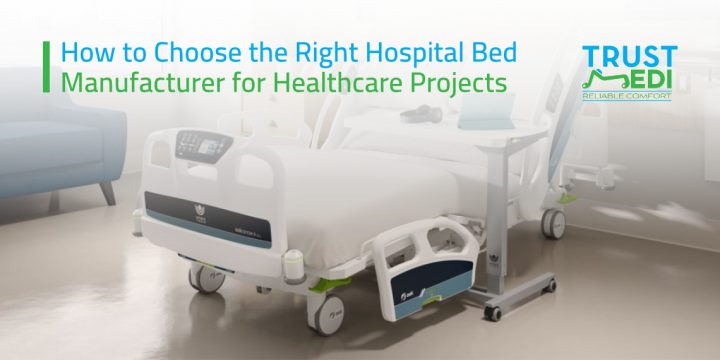
Would you trust a hospital bed that arrives late, lacks spare parts, or fails safety checks when patients are already in rooms? That’s exactly why How to Choose the Right Hospital Bed Manufacturer for Healthcare Projects is a serious buying decision, not a paperwork task.
A Hospital Bed Manufacturer is the party responsible for designing, building, testing, and supporting the bed—not just selling it.
This guide shows what to verify before you sign a contract, especially for Hospital Bed For Healthcare Projects—prepared by trust medi.
If you’re planning a full fit-out for a hospital or clinic, start with Complete Guide to Medical Furniture for Hospitals and Clinics.
Why Choosing The Right Hospital Bed Manufacturer Is Critical?
In healthcare projects, beds touch almost everything: patient handling, fall prevention routines, infection-control workflows, and nursing efficiency. A poor decision usually shows up in three ways:
- Safety risk: Bed system gaps, side-rail compatibility, and mattress matching can create entrapment hazards. The FDA issued guidance specifically to reduce life-threatening entrapment risks and outlines assessment and dimensional recommendations for hospital bed systems. (fda.gov)
- Operational pain: If a bed breaks and parts aren’t available, rooms go out of service and staff improvise.
- Project risk: Large rollouts depend on predictable lead times, documentation, and consistent batches. WHO notes that technical specifications should be considered before purchase to ensure quality, safety, and proper planning.
Choosing the right manufacturer reduces total cost, delays, and “hidden” risk that appears after commissioning.
For basic elevation needs without added complexity, the Half Fowler patient bed (MHB-01) fits well in general wards and recovery areas.
What Is A Hospital Bed Manufacturer?
A Hospital Bed Manufacturer is the company that actually produces the bed—typically controlling design, welding/structure, coating, electrical integration (if applicable), testing, packaging, and quality control.
A strong manufacturer can usually provide:
- Detailed drawings and data sheets
- Batch traceability and QC records
- Spare parts lists and service manuals
- Test evidence aligned with Hospital Bed Quality Standards
- Clear warranty and after-sales structure
In many tenders, they may also be a Medical Furniture Manufacturer or even a Medical Equipment Manufacturer depending on their product scope.
Need Reliable Medical Furniture?
Explore Trust Medi’s product range for hospitals and clinics.
Manufacturer Vs Supplier Vs Distributor
This difference matters because accountability changes.
- Manufacturer: Builds the product, owns design and production responsibility.
- Supplier: Sells and delivers; could be the manufacturer or a third party. A supplier may also bundle beds with broader Hospital Furniture For Hospitals packages.
- Distributor: Represents brands in a region, often handling inventory and service coordination.
For healthcare projects, you often work with both:
- A verified Hospital Bed Factory (the source)
- A local Hospital Bed Supplier / Medical Equipment Supplier (delivery, installation, service)
Your contract should clearly state who is responsible for: compliance documents, warranty claims, spare parts availability, and on-site support.
For higher-traffic environments, a steel frame wheelchair is often preferred for its robustness and dependable daily handling.
Key Factors To Consider When Choosing A Manufacturer
When you compare options, don’t start with price. Start with risk control.
Core factors:
- Quality system and documentation discipline
- Proof of safety and performance testing
- Production capacity and lead time reliability
- Spare parts and after-sales support
- Project experience (real references)
- Export readiness (if cross-border)
- Clarity in specs and change control
WHO guidance emphasizes the value of technical specifications to improve access to safe, effective devices and support planning and lifecycle management. (World Health Organization)
Manufacturing Quality And Production Capacity
Even a great product design can fail if production isn’t consistent.
What to verify in manufacturing quality:
- Welding consistency and structural reinforcement points
- Coating preparation and corrosion resistance
- Electrical components sourcing (for electric beds)
- Final inspection steps and functional testing
- Packaging that prevents damage in long transport
What to verify in production capacity:
- Monthly output for your bed model(s)
- Ability to maintain the same parts and specs across batches
- Lead time under peak load
- Contingency plans (supplier alternatives, component shortages)
For large Hospital Bed Procurement programs, ask for a phased production schedule tied to your project timeline—then put penalties and acceptance criteria in writing.
In OB/GYN rooms where comfort and adjustability matter, an adjustable gynecology examination bed helps streamline examinations while improving the patient experience.
Certifications And Compliance Requirements
“Certified” should never be a marketing word in procurement—it should mean verifiable scope, valid certificates, and correct application to your product category.
Common requirements you may see:
- ISO 13485 (quality management system for medical devices) — ISO describes it as an internationally recognized QMS standard for design and manufacture of medical devices. (ISO)
- IEC 60601-2-52 (adult medical bed safety and essential performance) — ISO’s listing notes it applies to basic safety and essential performance of medical beds intended for adults. (ISO)
- Entrapment risk assessment and compatible mattress/rail guidance — FDA’s hospital bed entrapment guidance outlines risk areas and dimensional recommendations. (fda.gov)
If a vendor claims to be a Certified Medical Manufacturer, request:
- Certificate number, scope, issuing body, validity dates
- Product test reports (not just a “statement of compliance”)
- Traceability approach (serial number structure, batch records)
Customization And Project-Based Solutions
Healthcare projects rarely fit “one-size-fits-all.” You may need:
- Different bed widths/lengths for wards vs ICU
- Side rail types based on patient profile
- Accessory compatibility (IV poles, traction, overbed tables)
- Head/foot boards aligned to your interior design and cleaning protocols
- Language requirements for labels and user manuals
A capable Hospital Furniture Manufacturer can offer custom finishes and accessory mounting without breaking compliance or delaying production. The key is documented change control: every custom option should have a clear spec sheet and approval process.
If you’re prioritizing durability and stability for daily clinic workload, the gynecology bed with square tubes (GB-0140) is built for consistent use and easy room integration.
Experience In Healthcare Projects
A manufacturer that can supply 50 beds is not automatically ready for 500+ beds across multiple sites.
Ask for evidence of project experience:
- Similar scale deliveries (bed counts, multi-site)
- Department mix (wards, ICU, emergency, step-down)
- Installation and commissioning scope
- References you can actually contact
- Photos/videos from real deployments (not stock)
WHO procurement resources stress that proper specs and planning are part of ensuring devices are safe and appropriate for the setting.
That “setting fit” is exactly where experienced Healthcare Project Suppliers stand out.
For teams shipping internationally, this covers the essentials: Hospital Furniture for Export: Compliance, Quality, and Logistics Explained.
Need Help Choosing Medical Furniture?
Talk to Trust Medi — we’ll help you pick the right options for your hospital or clinic.
Export And Logistics Capabilities
If you’re importing, export capability is not optional—it’s a risk multiplier.
A manufacturer with strong logistics readiness (or a partnered Hospital Bed Exporter) should provide:
- Export packaging standards (drop protection, humidity control)
- HS codes and documentation pack
- Country-specific labeling support (where required)
- Delivery and insurance terms (Incoterms clarity)
- Spare parts shipment plan (separate cartons, priority shipping options)
Export failures don’t look like dramatic disasters—they look like beds stuck at customs, missing certificates, damaged goods, and delayed openings.
If you want a mobility option that looks as good as it performs, this stylish patient wheelchair fits well in clinics that care about both usability and presentation.
After-Sales Support And Maintenance
This is where “cheap” deals become expensive.
Minimum after-sales questions:
- What parts are considered consumables (casters, actuators, control handsets, rails)?
- What is the typical lead time for spares?
- Do you offer service training for biomedical teams?
- Is there a local service partner?
- Warranty coverage details: what’s included, what voids it, response times
If you’re buying through a Hospital Bed Supplier or Medical Furniture Supplier, confirm whether they hold spare stock locally or rely on factory shipments.
For precise patient positioning and easier nursing care, the Full Fowler patient bed (MHB-02) is a practical option for wards that need flexible back and leg adjustment.
Cost Vs Quality Considerations
Don’t compare bed prices without comparing what you’re actually getting.
A practical way to evaluate:
- Upfront cost: unit price + accessories + installation + training
- Running cost: spare parts + downtime + service visits
- Risk cost: noncompliance, delivery delays, warranty disputes, incompatibility issues
Also consider safety guidance around bed systems. FDA’s entrapment guidance highlights compatibility issues and the importance of assessing openings and components in the full bed system (bed + rail + mattress + accessories).
That’s why quality isn’t just “strong steel”—it’s system design and documented compatibility.
For outpatient rooms and specialty clinics, use Examination Beds: Specifications, Materials, and Clinical Use Cases.
Common Mistakes When Selecting A Manufacturer

Avoid these frequent buyer traps:
- Choosing a vendor based on photos and brochures, not test evidence
- Accepting “ISO certified” without checking scope, dates, and issuing body
- Not defining acceptance inspection: what you will measure on arrival
- Skipping mattress compatibility requirements (rail gaps change with mattress thickness)
- Over-customizing late in the project (changes create delays and inconsistent batches)
- Forgetting spare parts and training in the contract
- Buying through a middle party without confirming who owns warranty responsibility
Checklist For Healthcare Project Buyers
Use this as a quick evaluation sheet for Hospital Bed Procurement:
Manufacturer & factory
- Confirm factory address, production lines, and capacity
- Ask for recent batch QC records and inspection steps
Compliance
- ISO 13485 certificate (scope + validity)
- Bed standard alignment (e.g., IEC 60601-2-52 where applicable)
- Entrapment risk approach and documentation
Product documentation
- Full datasheets, drawings, user manual, spare parts list
- Cleaning guidance and chemical compatibility notes
Project readiness
- Phased delivery plan
- Installation and commissioning responsibilities
- Training plan for nursing and biomedical teams
Service
- Warranty details and response times
- Local service coverage or partner plan
- Spare parts stocking strategy
Commercial
- Clear Incoterms (if import/export)
- Payment schedule tied to inspection and acceptance milestones
FAQ About Hospital Bed Manufacturers
1) Should I buy directly from a Hospital Bed Factory or through a supplier?
For large projects, many buyers use both: the factory for manufacturing accountability and a regional Hospital Bed Supplier for logistics, installation, and service. Make responsibilities explicit in the contract.
2) What makes a supplier a reliable Healthcare Project Supplier?
Clear specs, documented compliance, predictable delivery, strong installation planning, and real after-sales capacity—not just a low quote.
3) What safety topics must be addressed in bed selection?
At minimum: bed system compatibility (rails + mattress), entrapment risk assessment, and standards-based safety/performance testing. FDA provides detailed guidance focused on reducing life-threatening entrapment risks.
4) Is ISO 13485 always required?
Not always by law in every country for every bed, but it’s a strong signal of medical-device QMS discipline and is widely used in healthcare purchasing decisions.
5) What should I include in technical specifications?
Define dimensions, safe working load, height range, rail type, caster specs, accessory compatibility, cleaning requirements, labeling/manual language, and acceptance criteria. WHO emphasizes that technical specifications should be considered before purchase to improve safety and proper planning.
Choosing the right Hospital Bed Manufacturer is really about protecting your project: stable production, proven compliance, predictable delivery, and service you can rely on after handover. When you verify certifications, demand clear documentation, confirm factory capacity, and lock spare parts and maintenance into the contract, you reduce risk and keep your wards running.
If you’re preparing a tender or upgrading wards, trust medi helps healthcare buyers shortlist a reliable Medical Furniture Manufacturer, coordinate with Healthcare Project Suppliers, and manage Hospital Bed Procurement from specifications to delivery—without surprises. Contact trust medi to review your project requirements and build a manufacturer comparison file you can trust.
