
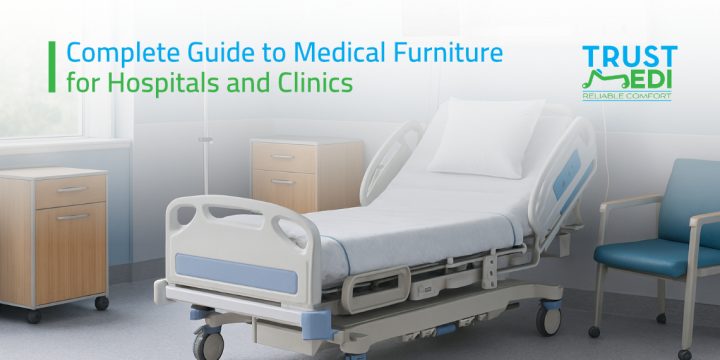
What makes a hospital room feel “ready for patients” the moment you walk in? A big part of the answer is Complete Guide to Medical Furniture for Hospitals and Clinics—the right beds, carts, seating, storage, and work surfaces built for constant use and strict cleaning.
In simple terms, medical furniture is the functional furniture used to examine, treat, move, and support patients and staff in healthcare spaces.
In this guide, you’ll learn what counts as medical furniture, how hospital needs differ from clinic needs, what to buy first, what standards matter, and how to source safely—brought to you by trust medi.
What Is Medical Furniture?
Medical furniture includes non-powered and powered items designed for clinical workflows, patient comfort, and infection-control routines. It’s not “regular furniture in a hospital.” It’s built for frequent disinfection, heavy loads, safe patient handling, and long duty cycles.
Common examples:
- Hospital beds (manual or electric), stretchers, trolleys
- Examination couches, procedure tables, treatment chairs
- Bedside cabinets, overbed tables, wardrobes
- Medical carts, instrument trolleys, IV stands
- Waiting-area seating, staff chairs, workstations
- Storage cabinets (clean/dirty separation), shelving systems
In purchasing documents you’ll often see it grouped under Healthcare Furniture Solutions or Healthcare Facility Furniture, and it may be supplied alongside Medical Equipment For Healthcare Facilities by the same vendor.
To understand which bed type fits each department and budget, read Hospital Bed Types Explained: Manual vs Electric vs ICU Beds.
Need Reliable Medical Furniture?
Explore Trust Medi’s product range for hospitals and clinics.
Why Medical Furniture is important ?

Medical furniture affects outcomes more than many buyers expect—because it touches safety, speed, and hygiene every hour of every day.
Key reasons it matters:
- Infection control you can actually maintain
Furniture surfaces get cleaned constantly. Guidance on environmental cleaning emphasizes high-touch surfaces and frequent cleaning/disinfection routines in patient-care areas. (CDC) - Patient handling and fall prevention
Stable beds, proper side rails, safe brakes, and predictable height adjustment reduce incidents during transfers. - Workflow and staff efficiency
The right cart layout, storage zoning, and department-specific setups save time and reduce errors—especially in ER, ICU, and OR support areas. - Total cost control
Durable frames, quality casters, and tested coatings last longer and reduce downtime. Cheap items often “cost twice” through repairs and replacements.
If you’re buying Medical Furniture For Hospitals or Medical Furniture For Clinics, think of it as infrastructure, not décor.
Before you shortlist suppliers or submit a tender, use the checklist in How to Choose the Right Hospital Bed Manufacturer for Healthcare Projects.
Difference Between Hospital And Clinic Furniture
Hospitals and clinics share many furniture categories, but the duty cycle, risk profile, and standard requirements differ.
| Area | Hospitals | Clinics |
| Usage intensity | 24/7, multiple shifts | Usually daytime peaks |
| Patient acuity | Higher (ICU/ER/inpatient) | Lower (outpatient focus) |
| Cleaning frequency | Very high, strict protocols | High, but fewer “high-risk zones” |
| Mobility needs | More stretchers, transport, large carts | More compact carts, exam/treatment chairs |
| Space planning | Departments + isolation zones | Smaller rooms, faster turnover |
| Typical sourcing | Often large tenders | Smaller batches, quicker replenishment |
This is why Clinic Furniture Solutions are often about compact layouts and patient flow, while hospitals may need a broader range of Hospital Furniture Types and more complex specs.
If you’re prioritizing durability and stability for daily clinic workload, the gynecology bed with square tubes (GB-0140) is built for consistent use and easy room integration.
What Is the Types Of Medical Furniture Used In Hospitals?
Hospitals typically require a full spectrum of furniture across inpatient care, critical care, diagnostics, and support services.
Major categories of Hospital Furniture Types:
- Patient room essentials: hospital beds, bedside lockers, overbed tables, patient chairs, visitor seating
- Transport and movement: stretchers, transfer trolleys, wheelchairs, IV poles
- Clinical work: medication carts, procedure trolleys, instrument tables, nursing workstations
- Storage and logistics: clean supply cabinets, linen carts, shelving, utility carts
- Isolation/cleanability-focused items: seamless surfaces, minimal joints, easy-to-disinfect upholstery options
- Specialty furniture: ICU beds, bariatric solutions, recliners for dialysis/infusion, neonatal bassinets (as applicable)
For electrically operated medical beds, international safety requirements exist (for example, IEC 60601-2-52 covers safety and essential performance for certain medical beds). (ISO)
To avoid compliance and quality issues later, review Medical Furniture Manufacturing Standards: What Hospitals Should Look For.
Top Essential Medical Furniture For Clinics
Clinics aim for fast patient turnover, easy cleaning, and comfort—without the footprint of a hospital.
A practical “buy-first” list for Medical Furniture For Clinics:
- Examination couches / exam tables (height options, paper roll holder, easy-clean upholstery)
- Treatment chairs (for injections, minor procedures, ENT/derm setups)
- Clinical carts (medication cart, dressing cart, emergency cart depending on services)
- Storage cabinets (lockable, clean/dirty zoning, sharps/consumables separation)
- Waiting-area seating (durable, cleanable, stable—public and lounge seating standards can apply)
- Reception and nurse station desks (wire management, privacy panels where needed)
- Step stools, instrument stands, IV poles (small items that keep rooms functional)
Many clinics source these through a single Medical Furniture Supplier or a combined Hospital Equipment Supplier to simplify ordering and spare parts.
For modern wards focused on patient comfort and staff efficiency, see Electric Hospital Beds: Features, Benefits, and Use Cases in Modern Hospitals.
What Is the Materials And Durability Standards In Medical Furniture?
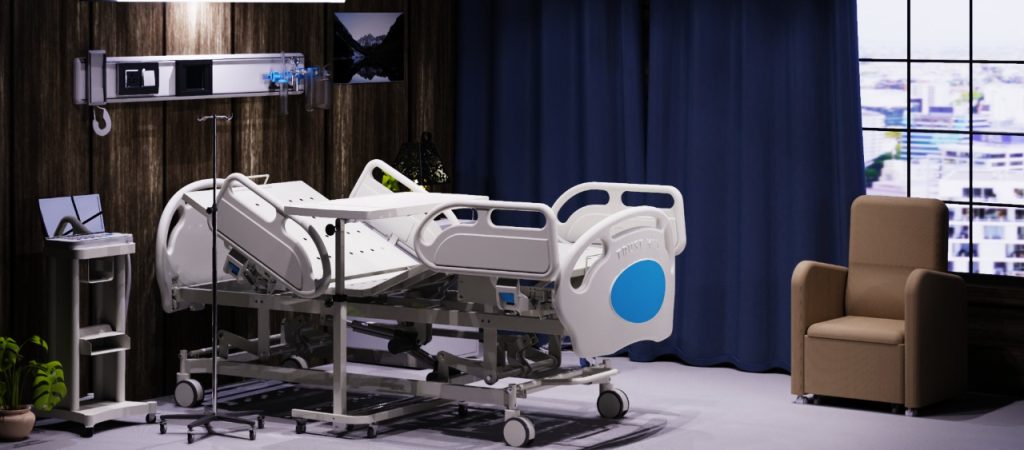
Materials decide how long furniture survives aggressive cleaning and heavy use.
Common materials (and what they’re good for):
- Powder-coated steel: strong frames, good corrosion resistance when coating is high quality
- Stainless steel (selected grades): excellent for wet areas, CSSD support spaces, procedure zones
- Aluminum: lighter frames; useful for mobility but needs proper structural design
- High-pressure laminate (HPL) / compact laminate: worktops, cabinetry fronts; check edge sealing
- Medical-grade upholstery (vinyl/polyurethane): cleanable, fluid-resistant; verify seam construction
- Engineering plastics: bumpers, handles, corner guards; good for impact zones
Durability isn’t only the material—it’s testing. Standards and guidance exist for furniture performance under cleaning and disinfecting exposure (healthcare-focused cleanability guidance is a common benchmark).
When you review Medical Furniture Manufacturing specs, ask about:
- Static and dynamic load testing
- Caster lifecycle and brake reliability
- Coating thickness, scratch resistance, chemical resistance
- Upholstery seam integrity and fluid ingress prevention
If you’re comparing upfront cost vs long-term operational value, check Manual Hospital Beds vs Electric Beds: Cost, Functionality, and Applications.
Need Help Choosing Medical Furniture?
Talk to Trust Medi — we’ll help you pick the right options for your hospital or clinic.
Safety And Hygiene Requirements
Medical furniture sits inside infection-control routines, so design details matter.
What to look for:
- Smooth, non-porous, easy-to-wipe surfaces with minimal seams and crevices
- Cleanable joints and protected fasteners (avoid exposed threads in splash zones)
- Rounded corners to reduce injury risk and improve wipe coverage
- Chemical resistance against commonly used disinfectants (ask for a compatibility list)
- Repairability—torn upholstery should be replaceable quickly
Health authorities emphasize the importance of cleaning/disinfecting high-touch surfaces more frequently in patient-care areas.
Also, guidance notes that upholstered furniture may be acceptable in general areas, but integrity matters—tears and damage should be repaired, and higher-risk areas may minimize upholstery.
For teams shipping internationally, this covers the essentials: Hospital Furniture for Export: Compliance, Quality, and Logistics Explained.
Compliance And Certifications For Medical Furniture
“Certified” can mean many things, so tie compliance to what you buy.
Common compliance buckets:
- Quality management at the manufacturer level (often ISO-based systems; verify scope and validity)
- Product safety/performance standards for specific items (especially powered beds, operating tables, etc.)
- Cleanability and chemical-resistance testing for healthcare environments
- Material emissions / indoor air quality for public areas (useful for waiting areas and wards)
For example, IEC 60601 series standards are widely recognized for medical electrical equipment; certain hospital furniture items that include electrical systems (like some beds or operating tables) may fall into that realm.
If your project includes imports/exports, ensure documentation is ready for customs and tenders—this is especially relevant when working with a Medical Furniture Exporter.
If you’re preparing procurement files for public entities or donors, reference Medical Furniture Requirements for Government and NGO Healthcare Projects.
Choosing The Right Medical Furniture Manufacturer
Picking a Hospital Furniture Manufacturer should feel like selecting a long-term partner, not a one-time seller.
A smart evaluation checklist:
- Proven experience supplying similar facilities (bed capacity, specialties, climate conditions)
- Clear drawings, data sheets, load ratings, and cleaning instructions
- Spare parts plan (casters, actuators, side rails, upholstery panels)
- Production consistency: batch tracking, QA records, incoming material control
- Real references: hospitals/clinics you can speak to
- After-sales support and warranty terms written clearly
If a supplier acts like a box-mover and can’t answer technical questions, treat that as a warning sign especially for large orders under Medical Furniture Procurement programs.
To select the right mobility solution for each area, explore Wheelchair Types and Applications in Healthcare Facilities.
Factors Affecting Medical Furniture Quality
Quality shows up in small details that get punished by daily use.
What drives Medical Furniture Quality:
- Frame design (weld integrity, reinforcement points, anti-rust preparation)
- Coatings and finishing (uniform thickness, no sharp edges, good adhesion)
- Hardware and fasteners (locking reliability, corrosion resistance)
- Casters (diameter, bearing quality, brake performance on different floors)
- Upholstery (sealed seams, foam density, tear resistance)
- Fit and alignment (drawers that don’t sag, doors that stay aligned)
Ask for test reports when possible, especially for public seating and high-load items. Industry furniture standards exist to verify safety and durability. (bifma.org)
In OB/GYN rooms where comfort and adjustability matter, an adjustable gynecology examination bed helps streamline examinations while improving the patient experience.
Medical Furniture For Different Hospital Departments
Different departments punish furniture in different ways, Matching specs to the department prevents waste.
| Department | Key furniture needs | What to prioritize |
| ER | stretchers, procedure trolleys, crash carts, fast-clean seating | mobility, brake reliability, wipeability |
| ICU | ICU beds, bedside cabinets, staff work surfaces | electrical safety (if applicable), load ratings, cable management |
| OR / Procedure | instrument trolleys, stainless worktables, storage | corrosion resistance, seamless design |
| Wards | beds, overbed tables, patient + visitor chairs | comfort + durability, easy cleaning |
| Outpatient | exam tables, treatment chairs, stools | compact footprint, quick-turn cleaning |
| Pharmacy | storage cabinets, medication prep surfaces | organization, security, chemical resistance |
| CSSD support | stainless racks/tables | corrosion resistance, drainage-friendly design |
This is where a supplier offering complete Healthcare Furniture Solutions can reduce mismatches and simplify maintenance.
Procurement Tips For Hospitals And Clinics
Practical steps that protect your budget and your timeline:
- Write specs based on use, not appearance
Describe loads, cleaning chemicals, duty cycle, caster requirements, and room constraints. - Standardize where you can
Same caster models, same upholstery grades, same cabinet modules = easier spares. - Ask for samples or a pilot room
Put one ward or one clinic room into real use before signing a full rollout. - Lock the spare parts list in the contract
Include a minimum spare kit per X units. - Confirm packaging and shipping details early
Important when sourcing through a Hospital Equipment Supplier or dealing with export lead times. - Train staff on basic use and cleaning
Many “product failures” are actually misuse or wrong chemical exposure.
For basic elevation needs without added complexity, the Half Fowler patient bed (MHB-01) fits well in general wards and recovery areas.
Medical Furniture For Large Healthcare Projects
Large projects (new hospitals, expansions, multi-site clinic networks) need a tighter approach.
What works well:
- Early coordination between design, biomedical, infection control, and procurement
- A master list grouped by department, room type, and quantities
- Phased delivery and installation plan (storage space is always smaller than you think)
- Factory inspection checkpoints for critical items
- Document control: test reports, user manuals, cleaning instructions, warranty certificates
This is also where Medical Furniture Manufacturing capacity and consistency matter most, A reliable Medical Furniture Supplier should show you how they scale without quality drop.
For higher-traffic environments, a steel frame wheelchair is often preferred for its robustness and dependable daily handling.
Common Mistakes When Sourcing Medical Furniture
Avoid these expensive traps:
- Buying “home/office grade” seating for waiting areas and expecting it to survive disinfectants
- Ignoring caster specs (tiny casters fail fast on rough floors and ramps)
- Choosing upholstery that looks nice but can’t handle your cleaning agents
- Ordering different models for every department without a spare parts strategy
- Skipping dimensional checks (doors, lifts, corridors, bed turns, elevator sizes)
- Selecting a vendor without verifying after-sales support, installation, and local service coverage
- Treating Medical Furniture Procurement as “lowest price wins” instead of “lowest lifecycle cost”
For precise patient positioning and easier nursing care, the Full Fowler patient bed (MHB-02) is a practical option for wards that need flexible back and leg adjustment.
FAQ for Medical Furniture
1) Is medical furniture the same as medical equipment?
Not exactly. Furniture supports care delivery (beds, carts, cabinets), while equipment includes diagnostic/therapeutic devices. Many projects bundle them under Medical Equipment For Healthcare Facilities, so clarify the scope.
2) What should I request from a manufacturer before purchase?
Data sheets, drawings, load ratings, cleaning instructions, warranty terms, spare parts list, and (when available) test reports aligned with relevant standards.
3) Can clinics use “hospital-grade” furniture?
Yes, and many do for critical items like exam tables and carts. The decision depends on volume, services, and cleaning intensity.
4) How do I check if furniture is easy to clean?
Look for smooth surfaces, sealed seams, minimal gaps, and documented cleaning/disinfectant compatibility. Guidance exists on cleaning/disinfection steps and high-touch surface focus.
5) Do I need an exporter?
If you’re buying across borders, a Medical Furniture Exporter can handle documentation, packaging standards, and shipping coordination often reducing delays.
Buying medical furniture is a safety decision, a workflow decision, and a long-term cost decision—all at once. When you match the right Hospital Furniture Types to each department, verify cleanability and durability, and choose a dependable Hospital Furniture Manufacturer, you end up with furniture that lasts and care spaces that run smoothly.
If you’re planning a new facility, upgrading departments, or launching a multi-site rollout, trust medi can support you with Healthcare Furniture Solutions, sourcing, and end-to-end Medical Furniture Procurement—from specifications to delivery. Reach out to trust medi today to build a quote list that fits your hospital or clinic needs without wasted spend.
