Examination Beds: Specifications, Materials, and Clinical Use Cases

Examination Beds: Specifications, Materials, and Clinical Use Cases

Have you ever seen a clinic visit slow down because the bed won’t adjust, squeaks, or feels unstable? That single piece of Patient Examination Furniture can change the whole workflow.

Examination Beds: Specifications, Materials, and Clinical Use Cases is a practical guide to what matters when you’re buying: specs, materials, safety, hygiene, and where each type fits clinically.

In short, the right examination bed is stable, easy to clean, comfortable for patients, and matched to your specialty needs—this is the approach we follow at trust medi.

What Are Examination Beds?

Examination Beds are clinical furniture designed for patient assessment, basic procedures, and short-duration positioning—not long-term inpatient care. You’ll also hear them called Medical Examination Beds, Clinic Examination Beds, or sometimes Hospital Examination Tables (especially when the design is flat and procedure-focused).

Unlike ward beds, examination beds are built for:

  • Quick patient on/off movement
  • Frequent surface disinfection
  • Position changes for clinician access (backrest, leg section, height)
  • Accessories like stirrups, paper roll holders, side supports, or armboards

They sit in the middle ground between “simple couch” and “procedure platform,” which is why specs and materials matter more than many buyers expect.

Why Examination Beds Are Essential In Clinical Settings?

Why Examination Beds Are Essential In Clinical Settings?

In daily practice, examination beds support three things clinics and hospitals care about:

  1. Clinical access
    A clinician needs stable positioning, correct working height, and predictable movement. That’s why Adjustable Examination Beds are common in busy rooms and specialty clinics.
  2. Patient flow
    If staff can clean fast, adjust fast, and move patients safely, appointments run on time. This is the quiet value of good Healthcare Examination Equipment.
  3. Patient confidence
    A wobbling frame or torn upholstery makes patients uneasy. A comfortable surface and safe step-in height reduce anxiety and help cooperation during exams.

For decision-makers, these beds are part of Clinical Furniture Solutions and Medical Furniture For Clinics—they affect experience and efficiency, not just room appearance.

Types Of Examination Beds Used In Healthcare

There isn’t one “best” bed—there’s a best fit per use case. Common types include:

  • Fixed-height examination couches: simple, cost-effective, fewer moving parts
  • Height-adjustable electric beds: ideal for staff ergonomics and safe transfers
  • Hydraulic examination beds: adjustable without electricity, useful where power is unreliable
  • Backrest-only adjustable models: good for general consult rooms
  • 3-section/4-section models: allow more positioning for procedures and specialty exams
  • Gynecology/OB examination beds: with leg supports, stirrups, and pelvic design
  • Bariatric examination beds: wider platforms and higher load ratings
  • Pediatric-friendly exam beds: safer edges, easy cleaning, calmer design

If you’re sourcing Examination Beds For Hospitals, you’ll often mix models across departments rather than standardizing a single design.

Key Specifications Of Medical Examination Beds

Buyers often ask for “a strong bed,” but you need measurable requirements. These are core Medical Bed Specifications to check:

Adjustment & movement

  • Height range (especially if you do transfers from wheelchairs)
  • Backrest angle range
  • Trendelenburg/reverse Trendelenburg (if required)
  • Head/leg section adjustments (manual or powered)

Dimensions & ergonomics

  • Length and width of the mattress platform
  • Low entry height (patient access)
  • Clinician working height (to reduce back strain)

Mobility & stability

  • Wheel diameter and quality
  • Central locking vs individual brakes
  • Anti-wobble frame design
  • Leveling feet (for fixed units)

Power & controls (electric models)

  • Actuator quality and smoothness
  • Handset durability (sealed, easy to disinfect)
  • Backup lowering option (manual override for safety)

Accessories

  • Paper roll holder, side rails, armrests
  • IV pole socket, oxygen cylinder holder
  • Stirrups, leg holders, side supports
  • Drawer or under-shelf storage

A helpful tactic in procurement is to request a compliance sheet mapping your room needs to the bed’s specs—this saves time for both the buyer and the Examination Bed Supplier.

Materials Used In Examination Bed Manufacturing

Examination Bed Materials determine lifespan, cleanability, and how the bed looks after thousands of wipe-downs.

Frame materials

  • Powder-coated steel: common, cost-effective, durable when coating quality is high
  • Stainless steel: strong corrosion resistance, favored in high-humidity or aggressive cleaning environments
  • Aluminum components: lighter parts, often used in sections or accessory rails

Upholstery & padding

  • Medical-grade vinyl / PU upholstery: designed for frequent cleaning and fluid resistance
  • Multi-layer foam: comfort plus shape retention
  • Seam style (stitched vs welded): welded seams can reduce fluid entry points

Surface details

  • ABS or molded plastic covers for corners and moving parts
  • Rounded edges and sealed joints to support cleaning

A good Examination Bed Manufacturer will specify not only “steel + vinyl,” but the coating system, thickness approach, and cleaning compatibility guidance.

Durability And Load Capacity Standards

Durability isn’t a marketing word—it should be documented. Focus on:

  • Safe Working Load (SWL): the maximum safe load including patient and applied forces
  • Static vs dynamic load: lifting/adjustment adds stress beyond a still load
  • Cycle testing: how many raise/lower cycles the mechanism can handle
  • Caster endurance: locking performance over time
  • Upholstery wear resistance: cracking, peeling, seam failure

A practical approach for hospitals: define SWL based on your patient population and keep a margin for staff leaning, accessories, and procedure pressure. For clinics, you can match the risk profile, but don’t underbuy—cheap frames become expensive fast.

If you have internal policies tied to Medical Furniture Standards, ask suppliers to show their test approach and warranty coverage that matches the expected duty cycle.

Safety And Patient Comfort Features

Safety is not “extra.” It’s part of usability.

Key safety features

  • Stable base geometry to prevent tipping
  • Reliable braking and lock indicators
  • Pinch-point protection around moving linkages
  • Emergency stop/override for electric movement (where relevant)
  • Non-slip step options for higher beds
  • Rounded corners and protected edges

Comfort features that actually matter

  • Foam density that supports without “bottoming out”
  • Upholstery that doesn’t feel sticky after disinfection
  • Quiet adjustment movement (patients notice noise)
  • Headrest/arm support options for longer exams

When buyers compare models, comfort can feel subjective. You can make it objective by asking for foam specifications, thickness, and real warranty terms for upholstery wear.

Hygiene And Infection Control Requirements

Examination beds sit in the “high-touch” category. Hygiene comes from design choices:

  • Smooth, wipeable surfaces with minimal seams
  • Covered mechanisms that reduce dust and splash retention
  • Fluid-resistant upholstery with sealed edges
  • Removable sections where deep cleaning is needed
  • Compatibility with common hospital disinfectants

In procurement, ask for a cleaning guide: approved chemicals, contact times, and what to avoid (some harsh agents shorten upholstery life). Good Healthcare Examination Equipment should stay clean without becoming fragile.

Examination Beds For Different Medical Specialties

Why Examination Beds Are Essential In Clinical Settings?

Your specialty should drive your configuration:

  • General practice / internal medicine: simple adjustable backrest, paper roll holder, storage shelf
  • Emergency / triage: robust frame, quick clean surfaces, strong casters, higher SWL
  • Gynecology/OB: stirrups/leg supports, cut-out options, stable pelvic area
  • Dermatology: patient comfort for longer positioning, headrest control
  • ENT: adjustable head support, clinician access around head area
  • Orthopedics: strong platform, stable positioning, accessory mounts
  • Dialysis or infusion assessment rooms: comfort-focused, arm support accessories
  • Imaging prep areas: easy transfers, reliable height adjustment

This is why “one-size-fits-all” tends to disappoint. Matching use cases is the quickest way to protect your budget.

Examination Beds In Hospitals Vs Clinics

Hospitals and clinics buy the same category, but the priorities shift.

Hospitals typically prioritize

  • High duty cycle durability
  • Broader patient profiles, including higher SWL needs
  • More accessories and multi-section positioning
  • Strong documentation and service support
  • Standardization across departments when possible

Clinics often prioritize

  • Space efficiency and clean design
  • Quick cleaning and fast adjustment
  • Lower total cost without sacrificing safety
  • Quiet operation and patient comfort

Both settings still need reliable performance, but the hospital environment punishes weak casters, thin coatings, and poor seam construction faster.

Compliance And Certification Requirements

Requirements vary by country and project type, but buyers commonly request:

  • Manufacturer quality system information (often ISO-based)
  • Product testing and safety documentation
  • Materials and upholstery compliance details
  • Warranty statements and service capability
  • Traceable labeling, serial/model identification, and manuals

If you buy through tenders or large networks, documentation is often evaluated as heavily as the bed itself. A responsive Examination Bed Supplier will provide a clear technical dossier, not a single brochure page.

Factors Affecting Examination Bed Quality

Two beds can look identical in photos and perform very differently. Quality usually comes down to:

  • Frame thickness and weld consistency
  • Coating preparation (surface prep makes or breaks powder coat life)
  • Actuator brand and installation (electric models)
  • Caster grade and mounting quality
  • Upholstery seam design and foam density
  • Spare parts availability and local service support
  • Real warranty coverage (what’s excluded matters)

Ask for a sample unit when possible, and test what staff actually do: brake lock, height movement, corner pressure, wipe-down behavior, and paper roll use.

Common Mistakes When Sourcing Examination Beds

Here are issues that cause regret later:

  1. Buying based on photos
    You miss wobble, brake weakness, and poor seam finishing.
  2. Ignoring height range
    If nurses and doctors keep bending, you’ll hear about it quickly.
  3. Underestimating cleaning impact
    Some upholstery looks fine at delivery and fails after months of disinfection.
  4. Not defining SWL clearly
    Then the bed gets used outside its safe range.
  5. Skipping service planning
    If actuators or casters fail and parts take weeks, the room becomes unusable.
  6. Overpaying for features you won’t use
    Trendelenburg or complex sections can be wasted if your clinical workflow never needs them.

FAQ About Examination Beds

1) What’s the best choice: electric or hydraulic?

Electric is great for frequent height changes and busy workflows. Hydraulic works well when you want adjustability without relying on power. Your room volume and power reliability should decide.

2) Do I need stainless steel frames?

Not always. High-quality powder-coated steel can perform very well. Stainless is often chosen for aggressive cleaning conditions, humid environments, or where corrosion risk is high.

3) What SWL should I choose?

Pick based on your patient population and expected use. If your facility handles heavier patients or procedures that apply extra force, choose a higher SWL and confirm it is documented.

4) How do I compare upholstery quality?

Ask for the material spec, seam type, cleaning compatibility, and warranty terms for upholstery wear. Also check how it feels after a disinfectant wipe—some surfaces become tacky or crack over time.

5) Are examination beds and hospital beds interchangeable?

They serve different workflows. Examination beds are built for short-term positioning and frequent cleaning; inpatient beds are built for longer stays, repositioning, and additional safety functions.


Choosing the right examination bed is not about picking a popular model—it’s about matching specs, materials, hygiene design, and load capacity to the way your teams work every day. When you align Medical Bed Specifications with your specialty use cases, you reduce breakdowns, speed up patient flow, and improve comfort without adding complexity.

If you’re sourcing Medical Examination Beds for new rooms, replacements, or multi-site rollout, trust medi can help you shortlist models, compare documentation, and secure reliable supply and after-sales support—reach out with your department list and expected quantities to get a tailored recommendation.

Wheelchair Types and Applications in Healthcare Facilities

Wheelchair Types and Applications in Healthcare Facilities

How many patient delays come from one “small” missing item—an available, safe wheelchair at the right time?

Wheelchair Types and Applications in Healthcare Facilities comes down to matching the chair to the patient, the corridor, and the workflow, not just picking a model from a catalog.

In this guide you’ll learn the most common Wheelchair Types, where each one fits inside a facility, and what hospitals should check before buying—brought to you by trust medi.


Why wheelchairs are not “basic equipment” in a hospital

Why wheelchairs are not “basic equipment” in a hospital

Wheelchairs sit at the center of daily movement: admissions, discharge, imaging, dialysis, outpatient clinics, and internal transfers. When the wrong chair is used, you don’t just lose time—you increase risk during transfers, braking, and turns.

Evidence reviews on fall prevention highlight that wheelchair condition and correct use matter (locks, maintenance schedules, transfer technique), and that falls can still happen when devices are poorly maintained or used incorrectly. (NCBI)

So if your procurement team is treating Hospital Mobility Equipment as “standard,” that’s usually when you see:

  • Chairs parked far from care areas (staff “borrow” from other floors)
  • Broken brakes and worn casters
  • One model forced to serve every scenario (and failing at most)


The short answer: how to choose the right wheelchair for your facility

Choose based on application, not brand first. A reliable mix usually includes:

  1. High-volume Transport Wheelchairs for quick escorted moves
  2. Durable Manual Wheelchairs for independent or semi-independent users
  3. A small number of specialty chairs for high-risk or high-need patients (bariatric, recliner, tilt)

Then build a simple “deployment plan” so units don’t hoard chairs and transport teams don’t run out.


Wheelchair Types and Applications used in hospitals and clinics

1) Manual Wheelchairs (general-purpose)

Manual Wheelchairs are the workhorse of many facilities: self-propelled rear wheels, push handles for attendants, and usually removable footrests.

Best for:

  • Patients who can self-propel short distances
  • Rehab settings where controlled mobility is part of recovery
  • Facilities that need durable Patient Mobility Equipment across mixed use

What to look for:

  • Strong frame, easy-to-clean surfaces, solid brake feel
  • Casters that roll well on vinyl and tile
  • Armrests that support safe transfers (flip-back or removable helps)

This category is what many teams mean by Medical Wheelchairs when they ask for a “standard hospital chair.”


2) Transport Wheelchairs (attendant-propelled)

Transport Wheelchairs use smaller rear wheels and are designed to be pushed, not self-propelled. In busy facilities, these are your fastest “move a patient now” option.

Best for:

  • ED to imaging, ward to discharge lounge, clinic room turnover
  • Short escorted trips where speed matters more than independence
  • High-volume Patient Transport Solutions

Operational advantage: they’re usually lighter and easier to maneuver through narrow doors and crowded hallways.


3) Hospital Wheelchairs built for tough daily use

You’ll see “Hospital Wheelchairs” used as a label for models engineered for continuous clinical traffic: reinforced frames, robust brakes, and parts that survive heavy cleaning cycles.

Best for:

  • Facilities with high throughput and central transport teams
  • Areas with frequent wipe-downs (ED, isolation corridors, procedure units)

Tip: even if two chairs look similar, the “hospital-duty” build quality often shows up in caster life, brake reliability, and frame rigidity over time.


4) Bariatric wheelchairs (high-capacity seating)

Bariatric chairs are for larger patients and higher load needs, with wider seats and reinforced frames.

Best for:

  • Safe transfers and dignified transport for higher-BMI patients
  • Reducing staff strain during pushes and turns

Key checks:

  • Rated capacity (don’t guess)
  • Doorway clearance and turning radius in your building
  • Wider footrests and stable braking


5) Reclining wheelchairs (when sitting upright isn’t possible)

These allow back angle adjustment, supporting patients who can’t tolerate upright posture.

Best for:

  • Post-op patients with positioning needs
  • Patients with fatigue, orthostatic intolerance, or pain in upright seating
  • Longer transports where comfort reduces agitation


6) Tilt-in-space wheelchairs (pressure management and positioning)

Tilt-in-space changes the whole seating angle to redistribute pressure, support posture, and improve comfort for higher-risk patients.

Best for:

  • Patients at higher pressure injury risk
  • Complex positioning needs (often guided by rehab/OT)

If you have long waiting periods in corridors or discharge lounges, these chairs can reduce complications for certain populations.


7) Specialty types (standing, stair-climbing, powered)

Some facilities also keep niche models—standing or stair-climbing chairs, and powered mobility options—usually in limited quantities and with strict protocols.

In the US, FDA device classifications for wheelchair categories vary by type; for example, FDA listings show mechanical wheelchairs under 21 CFR 890.3850 as Class I, while powered and stair-climbing wheelchairs appear as Class II categories in the same database listing. (FDA Access Data)
(Procurement teams should still confirm local regulatory and facility policy requirements before standardizing a specialty fleet.)


Where each wheelchair type is used inside healthcare facilities

Where each wheelchair type is used inside healthcare facilities

Emergency Department and admissions

  • Transport Wheelchairs for rapid intake and fast imaging trips
  • A few durable Wheelchairs For Hospitals staged near triage and radiology routes

Inpatient wards

  • Manual Wheelchairs for patient independence when appropriate
  • A small number of recliners or tilt chairs for higher-need patients
  • Dedicated stock for discharge peaks (late afternoon is where shortages hurt)

Imaging and diagnostics (CT/MRI/X-ray)

  • Chairs with predictable turning and stable brakes
  • Easy-to-clean materials and quick footrest removal
  • Transport models often win here due to speed and maneuverability

Outpatient departments and clinics

For Wheelchairs For Clinics, the priorities shift:

  • Quiet rolling, easy steering, and compact storage
  • Fast wipe-down between patients
  • Enough chairs to prevent bottlenecks at registration

Patient transfer teams and long corridors

  • Light, reliable Transport Wheelchairs reduce staff fatigue
  • Consistent parts reduce downtime (caster swaps, brake adjustments)


A simple comparison table buyers can use

Type Who propels Best for Watch-outs
Manual Wheelchairs Patient or attendant Mixed use + some independence Heavier; needs larger storage footprint
Transport Wheelchairs Attendant High-volume escorted moves Not ideal for self-propulsion
Hospital-duty models Mostly attendant Heavy daily utilization Slightly higher cost, worth it in durability
Bariatric Attendant Larger patients, safer transport Door clearance + turning radius
Reclining / Tilt Usually attendant Positioning + longer sits Training needed; more moving parts


Safety and risk: what hospitals should standardize

A wheelchair is only “safe” if staff can use it the same way every time.

Minimum standard practices:

  • Daily quick check: brakes lock firmly, casters roll smoothly, footrests secure
  • Clear transfer protocol and staff refreshers
  • Maintenance tags (last inspection date) on high-traffic chairs

Fall prevention guidance reviews point out that faulty locking mechanisms, lack of maintenance schedules, and poor transfer technique can increase risk, and recommend ensuring wheelchairs are appropriate and in good working order. (NCBI)


Quality standards and durability: what to ask about 

Many manufacturers test against parts of the ISO 7176 wheelchair standards (stability, strength, fatigue, etc.). For example, ISO pages describe test methods for static stability (ISO 7176-1) and strength/fatigue requirements (ISO 7176-8). (ISO)

When evaluating a Wheelchair Manufacturer or a Wheelchair Supplier, you can ask:

  • Which ISO 7176 tests are relevant to this model, and do you provide test results or summaries?
  • What’s the typical caster and brake replacement cycle in hospital use?
  • What spare parts are stocked locally, and how fast is delivery?

You’re not trying to become an engineer—you’re trying to reduce downtime.


Procurement checklist for hospitals (what actually prevents bad purchases)

Use this when sourcing Medical Equipment For Mobility and broader Healthcare Facility Equipment:

  1. Define locations & counts
    • How many chairs per ward? Per clinic? Per imaging unit?
    • Who owns the fleet—units or central transport?
  2. Match chair to route
    • Tight corridors, elevators, ramps, thresholds
    • Door widths and turning points (bariatric planning matters here)
  3. Standardize consumables
    • Casters, brakes, footrests, cushions
    • Fewer SKUs = faster repairs
  4. Plan cleaning compatibility
    • Materials that tolerate frequent disinfectant wipe-downs
    • Minimal seams and easy access areas
  5. Training & handover
    • Quick staff orientation for any specialty chair
    • Simple “how to check brakes” guide attached to fleet areas

This is the difference between buying wheelchairs and building Healthcare Mobility Solutions that actually work at scale.


Stocking strategy: how many wheelchairs do you need?

A practical approach many facilities use:

  • Baseline fleet sized for normal patient flow
  • Extra buffer for discharge rush hours and peak outpatient days
  • Separate “clean-ready” staging zone (chairs disappear when this doesn’t exist)

If your teams are constantly “hunting” for chairs, the issue is rarely staff behavior—it’s usually fleet sizing and staging.


Working with a supplier: what good support looks like

When you buy Hospital Mobility Equipment, support is part of the product.

A strong Wheelchair Supplier should provide:

  • Clear model differentiation (not “this one is nicer”)
  • Service parts availability and simple warranty terms
  • Facility guidance on staging and labeling
  • Optional maintenance schedule templates

This is especially important when you’re buying Wheelchairs For Hospitals across multiple departments with different needs.

FAQ (quick answers buyers ask)

Are transport wheelchairs “medical-grade”?
They can be. The question is whether the model is built for repeated clinical use and cleaning, and whether parts support is reliable.

Should clinics buy manual or transport chairs?
Most outpatient areas do best with transport models plus a smaller set of manual chairs for patients who can self-propel.

Do standards matter if the chair “feels sturdy”?
Feeling sturdy is not a test method. Standards and documented testing help you compare durability and stability across vendors. (ISO)


The best wheelchair fleet is rarely one model—it’s a planned mix of Wheelchair Types matched to real routes, real patients, and real staff workflows. Start with dependable Manual Wheelchairs and high-throughput Transport Wheelchairs, then add specialty units where clinical need justifies them, and protect the investment with maintenance and staging rules.

If you’re sourcing Medical Wheelchairs, Patient Mobility Equipment, or complete Patient Transport Solutions for your facility, trust medi can help you select the right models, standardize your fleet, and keep uptime high—reach out to trust medi to get a hospital-ready quotation and product shortlist tailored to your departments.

Medical Furniture Requirements for Government and NGO Healthcare Projects

Medical Furniture Requirements for Government and NGO Healthcare Projects

Why do public healthcare buyers reject “good” products? Because in public tenders, compliance beats opinions. Medical Furniture Requirements for Government and NGO Healthcare Projects are strict, documented, and audited—so your furniture must match the spec line by line, not just look right.

In this guide you’ll learn what public projects are, why rules are tighter, the standards and certifications buyers ask for, how tenders describe furniture, and what suppliers must deliver at scale.

If you’re sourcing for a hospital project, this will help you buy with fewer delays and fewer rejected submissions—brought to you by trust medi.


What Are Government And NGO Healthcare Projects?

Government and NGO projects usually mean public money, donor money, or both, spent under formal procurement rules. Examples include:

  • New public hospitals, expansions, and refurbishments
  • Primary care clinics, mobile units, emergency response facilities
  • National programs funded by donors (Global Fund-style structures, development banks, UN agencies)
  • Humanitarian deployments where NGOs need quick, standardized setups

These projects often fall under Healthcare Infrastructure Projects, where furniture is not “just furniture.” A bed, trolley, exam couch, or cabinet can be treated as a regulated product, especially when it affects patient safety, infection control, or electrical safety.


Why Medical Furniture Requirements Are Strict In Public Projects?

Why Medical Furniture Requirements Are Strict In Public Projects?

Public buyers tighten requirements for three reasons:

  1. Patient safety and liability
    If a bed collapses, a rail fails, or materials can’t be disinfected, the risk becomes a public issue—not a private complaint.
  2. Audit trails
    Government and NGOs must show that selections were fair, documented, and defensible. Many procurement frameworks explicitly focus on technical compliance and evaluation criteria. (popp.undp.org)
  3. Lifecycle cost
    They care about maintenance, spare parts, training, and durability because they may run the asset for years with limited replacement budgets.

This is why you’ll see phrases like Hospital Furniture For Public Sector, and why tenders demand clear proof, not marketing.


Key Medical Furniture Standards For Government Projects

Requirements vary by country and donor, but the same “families” of standards show up repeatedly.

1) Medical-bed electrical safety standards

If you supply powered beds or beds with electrical functions, many buyers reference IEC standards. A common one is IEC 60601-2-52, focused on safety and essential performance for adult medical beds. (ISO)

2) Quality management for medical devices

Even when the item looks like furniture, public buyers often want a manufacturer operating a medical-device QMS such as ISO 13485. (ISO)

3) Regional regulatory frameworks

For Europe-linked funding or destinations, CE marking and alignment to the EU medical device framework can matter for certain categories. The legal basis is the EU Medical Device Regulation (EU) 2017/745. (EUR-Lex)

4) Infection prevention and cleanability expectations

Even when no single “furniture standard” is cited, tender language often demands smooth, non-porous, disinfectant-resistant surfaces, sealed joints, and documented cleaning methods—especially in high-risk areas. Public IPC specs commonly reference recognized standards definitions in specialized spaces. (Isomer User Content)

This is where buyers start using terms like Medical Furniture Standards and expect you to prove them in writing.


Compliance And Certification Requirements

Public buyers often request “evidence packs” that show Medical Equipment Compliance, What they typically ask for:

  • ISO certificates (often ISO 13485; sometimes ISO 9001 as a baseline) (ISO)
  • Product test reports (electrical safety, stability, load tests, coatings, fire-retardancy where required)
  • Declarations of Conformity (for markets that require them) and traceable labeling
  • Warranty terms, preventive maintenance plans, and spare parts commitments
  • Training plan for biomedical/maintenance teams (especially for beds and powered items)

For NGO supply, donation-style projects can also require alignment with WHO guidance on ensuring items match needs and can be maintained locally. (World Health Organization)

Use this wording naturally in your documents: Healthcare Project Requirements and Medical Furniture Procurement.


Medical Furniture Specifications For Tenders

Tenders are not written like brochures. They’re written like checklists. Many Hospital Furniture Tenders include:

  • Exact dimensions and tolerances
  • Safe working load (SWL) / maximum patient weight
  • Materials, coating type, corrosion resistance, and chemical resistance
  • Drawer/cabinet configurations, lock requirements, caster types
  • Accessories and compatibility (mattresses, IV poles, side rails, monitors, storage bins)
  • Cleaning/disinfection compatibility and test evidence
  • Packaging requirements and labeling in local language

A tender-ready specification checklist (sample table)

Category What buyers often write What you should submit
Performance SWL, stability, rail strength Test report + stated SWL + method
Materials Stainless grade / powder coat / antimicrobial claim Material certs + coating spec + cleaning compatibility
Safety Pinch-point protection, sharp-edge limits, electrical safety for powered beds Risk/safety statement + IEC report when applicable (IEC Webstore)
Documentation Manuals, maintenance schedule, parts list Full document pack + revision control
Warranty 1–5 years + service SLAs Warranty letter + service network plan

This is where Healthcare Project Furniture becomes a technical deliverable, not a catalog page.


Volume And Scalability Requirements

Public projects purchase in bulk: dozens of wards, hundreds of beds, entire departments. That’s why buyers ask:

  • Production capacity proof (monthly output, lead times, surge capacity)
  • Consistency controls (batch traceability, incoming inspection, QA gates)
  • Standardization across sites (same model, same spare parts, same manuals)

For Government Hospital Furniture, standardization reduces training time and keeps maintenance manageable.


Quality And Durability Expectations

Safety Standards For Electric Hospital Beds Quality And Durability Expectations

Public buyers assume hard use: high patient turnover, aggressive disinfectants, frequent movement. They expect:

  • Frames that don’t flex or deform under repeated loads
  • Weld quality that survives transport and daily stress
  • Coatings that resist chipping and hospital-grade chemicals
  • Casters that roll smoothly under load and lock reliably
  • Upholstery that resists fluids and cracking (and can be replaced)

If you are responding as a Medical Furniture Supplier, write durability in measurable terms: load cycles, coating thickness, salt-spray performance (when requested), and warranty scope.


Logistics And Delivery For Large Projects

Large projects fail on logistics more than people admit. Common tender needs:

  • Staged deliveries by building/ward, aligned to construction milestones
  • Site access constraints (elevators, door widths, loading bays, storage rooms)
  • Installation, assembly, and commissioning plans
  • Packaging that survives long routes and humidity
  • Clear Incoterms, customs documentation, and labeling by carton/pallet

For NGOs, last-mile delivery can include remote roads and short setup windows. That’s when NGO Healthcare Equipment planning becomes as important as manufacturing.

Documentation And Approval Processes

Public buyers love documents because documents survive audits. Expect requests like:

  • Technical datasheets with model codes
  • Country of origin and HS codes
  • Certificates (ISO, test reports), plus notarization or legalization in some markets
  • User manuals + maintenance manuals + parts lists
  • Acceptance test procedure (ATP) for on-site checks
  • Training attendance sheets and handover certificates

WHO guidance on medical device provision stresses planning, suitability, and coordination with recipient needs—public projects mirror that mindset even when it’s not “donation.” (World Health Organization)

This is also where phrases like Medical Equipment For Government Hospitals and Medical Equipment For NGOs show up in paperwork, even when the product category is furniture.


Supplier Evaluation Criteria

Most public awards are not “cheapest wins” in the way people assume. Many evaluations combine:

  • Technical responsiveness (full compliance to spec)
  • Price
  • Delivery schedule
  • Warranty and service capability
  • Experience in similar deployments
  • Financial stability and ethical/legal declarations

Procurement frameworks from major institutions emphasize the structure of technical specifications and evaluation approaches. (The World Bank Docs)

If you’re bidding on Medical Furniture For Government Projects, your bid should read like a compliance map: requirement → your response → evidence.


Common Challenges In Government And NGO Projects

Here are issues that repeatedly cause delays or rejections:

  1. “Equivalent” products without proof
    If the tender calls for a standard or feature, “equivalent” must be proven with test data and clear mapping.
  2. Mismatch between site reality and spec
    Doors too narrow, power sockets missing, floor slopes, no storage space. Site surveys help.
  3. Documentation gaps
    Missing manuals, unlabeled cartons, inconsistent model numbers across documents.
  4. After-sales weakness
    No spare parts plan, unclear service points, no training plan.
  5. Changing timelines
    Construction delays, funding tranches, emergency reprioritization.


How Manufacturers Meet Public Sector Requirements

Strong manufacturers build compliance into the product and process:

  • Design controls and risk thinking (especially for powered beds and safety-critical parts)
  • Standardized BOMs for repeatable quality
  • Traceability from raw material to finished unit
  • Testing routines aligned with recognized standards (for example, IEC 60601-2-52 for adult medical beds where applicable) (IEC Webstore)
  • Document control: every manual and datasheet version matches the shipped model
  • Field feedback loops: repairs and complaints feed into design improvements

That’s what turns “we can supply” into reliable Hospital Furniture For NGOs and government-scale delivery.


Best Practices For Supplying Medical Furniture To NGOs

NGO projects can move fast, but they still demand discipline. Practical habits that work:

  • Start with need-fit, not catalog-fit: confirm clinical workflow, cleaning practice, staffing, and available maintenance. WHO donation guidance stresses matching needs and ensuring maintainability. (World Health Organization)
  • Use modular kits: ward kits (beds + lockers + overbed tables) reduce missing items and speed setup.
  • Plan consumables and spares: casters, actuators (if powered), rails, handles, bumpers.
  • Train simply: a 60-minute session with a checklist, then quick refreshers.
  • Document everything: NGOs report to donors; your documents become their proof.

This approach reduces friction in Medical Furniture Procurement and makes audits easier.


FAQ About Medical Furniture For Government Projects

1) Is hospital furniture always considered a “medical device”?

Not always. It depends on function, risk, and local regulation. Powered beds and certain clinical items are more likely to be treated under medical device rules, which is why IEC standards and regulatory frameworks may appear in tenders. (IEC Webstore)

2) What’s the single biggest reason bids get rejected?

Missing or unclear compliance evidence. If the tender asks for proof, submit test reports, certificates, and a requirement-by-requirement compliance table.

3) Do NGOs accept alternatives if the exact model isn’t available?

Sometimes, but only when you show the alternative meets the same need, fits the environment, and can be maintained. WHO guidance emphasizes suitability, planning, and coordination. (World Health Organization)

4) What should a tender submission include besides price?

Datasheets, drawings, certificates, test reports, delivery schedule, warranty terms, spare parts plan, training plan, and after-sales coverage.

5) How do buyers compare suppliers fairly?

They typically score technical compliance first, then compare price and commercial terms using a defined evaluation approach. (The World Bank Docs)


Public healthcare projects reward suppliers who treat furniture like a safety-and-compliance product, not a showroom item. If you’re preparing bids for Medical Furniture For Government Projects or supplying Hospital Furniture For Public Sector programs, focus on standards, documentation, durability, and service readiness—then scale logistics like a real project, not a simple shipment.

If you want help matching tender specs, preparing compliance packs, or planning large deliveries for government and NGO facilities, trust medi can support your procurement from specification to delivery and handover—reach out and share your project list to get started.

Hospital Furniture for Export: Compliance, Quality, and Logistics Explained

Hospital Furniture for Export: Compliance, Quality, and Logistics Explained

A delayed hospital opening can start with something as “simple” as a missing certificate on a patient bed shipment.

Hospital Furniture for Export: Compliance, Quality, and Logistics Explained means you can export hospital furniture safely when your products meet the destination’s regulations, follow recognized standards, and are shipped with the right packaging and documents.

In this guide you’ll learn what export-ready hospital furniture looks like, which standards and certifications matter, and how to plan packaging, shipping, and customs—brought to you by trust medi.

What Is Hospital Furniture for Export?

Hospital Furniture Export is the process of manufacturing, preparing, documenting, and shipping hospital-use furniture across borders for hospitals, distributors, or project contractors. It often overlaps with Medical Furniture Export, and sometimes sits under a wider scope that includes Medical Equipment Export and Healthcare Equipment Export.

Typical export items include:

  • Hospital beds (manual and electric), stretchers, and trolleys
  • Examination couches, treatment tables, and bedside cabinets
  • Overbed tables, IV stands, ward screens, and patient chairs
  • Nurse stations, storage systems, and stainless-steel clinical furniture

A Hospital Furniture Manufacturer exporting internationally is expected to prove safety, traceability, consistent production quality, and correct labeling—especially when products are considered medical devices in the destination market.

Why Compliance Is Critical In Medical Furniture Export?

In Medical Furniture Export, compliance is not “paperwork after production.” It is what determines whether your shipment clears customs, gets accepted by hospital engineering teams, and can be used without liability risk.

Here’s what can happen when Healthcare Export Compliance is weak:

  • Shipments held at customs for missing declarations, labels, or registrations
  • Project delays because tenders require specific standards and test reports
  • Warranty disputes because packaging or handling instructions were unclear
  • Rejection by hospital infection control teams due to material or cleaning concerns

If you’re supplying Medical Furniture For International Markets, compliance also protects you: it reduces recalls, disputes, and reputational damage, and helps you bid for larger hospital tenders and Hospital Furniture For Projects.

International Standards For Exporting Hospital Furniture

International Standards For Exporting Hospital Furniture

International buyers often expect alignment with well-known standards, even when local rules differ.

Key standards commonly referenced in export programs include:

  • ISO 13485 for quality management systems used by medical device manufacturers (frequently requested when furniture is classified as a device or accessory). (ISO)
  • ISO 14971 for medical device risk management principles (useful when your furniture has hazards such as entrapment points, moving parts, or electrical risks in powered beds). (ISO)
  • EU MDR (Regulation (EU) 2017/745) when selling into the EU market for items regulated as medical devices, including conformity assessment, CE marking, UDI obligations, and importer/distributor responsibilities. (EUR-Lex)
  • Country or region guidance that influences procurement expectations (for example, WHO quality and safety considerations used in procurement and donations programs). (World Health Organization)

Important note: not all hospital furniture is regulated the same way everywhere. Some destinations treat certain furniture as general products; others classify items like hospital beds (especially powered beds), stretchers, and accessory components as medical devices. Your export plan should assume the stricter interpretation until confirmed.

Quality Requirements For Export Medical Furniture

Buyers don’t only ask “does it work?” They ask “will it still work after years of cleaning, heavy use, and frequent movement?”

Practical Medical Furniture Quality expectations usually include:

  1. Material integrity
    • Corrosion resistance for metal parts (especially in coastal or high-humidity regions)
    • Durable powder coating or stainless steel finishes suitable for clinical environments
  2. Cleanability and infection control
    • Smooth surfaces where possible, minimal dirt traps, compatible with common disinfectants
  3. Safety and ergonomics
    • Load rating clearly stated and verified
    • Side-rail safety, pinch-point control, stable casters with brakes
  4. Consistency from batch to batch
    • Same components, same tolerances, same performance—critical for multi-site projects
  5. Spare parts and after-sales readiness
    • Hospitals often require spare-part availability and service documentation

If you present quality only as “good materials,” you’ll lose to exporters who present quality as testable evidence (reports, traceability, and inspection records).

Certifications Needed For Medical Furniture Export

Certifications depend on product type and destination. A simple bedside cabinet may need far less than an electric hospital bed with motors and control systems.

Common certification and documentation buckets:

  • Quality management: ISO 13485 is widely recognized for medical device QMS and often requested by buyers. (ISO)
  • Risk and safety evidence: documented risk controls aligned with ISO 14971 concepts. (ISO)
  • Market access marks: CE marking under EU MDR where applicable. (EUR-Lex)
  • Country-specific compliance: UK market requirements (UKCA/CE acceptance and labeling obligations) and local importer/responsible person details where required. (GOV.UK)

A useful way to think about it: certifications are rarely “nice to have” in tenders. They’re usually pass/fail.

Packaging And Protection For Medical Equipment

Export success can be ruined by bad packaging. Even perfect products can arrive scratched, bent, or contaminated.

For Medical Equipment Shipping and furniture export packaging, focus on:

  • Protection strategy
    • Foam blocking, corner protection, anti-scratch films, moisture barriers
    • Separate packing for accessories and fasteners to avoid transit damage
  • Crate compliance
    • If you use wood packaging, many countries require compliance with ISPM 15 treatment and marking rules to prevent pest transfer. (Welcome at ISPM-15.com)
  • Humidity and corrosion control
    • Desiccants, VCI materials (when relevant), sealed bags for sensitive parts
  • Drop and vibration reality
    • Assume forklifts, stacking, long road legs, and container vibration

If your product includes batteries (some powered systems, remotes, or tracking devices), you must also consider air/sea dangerous goods requirements and proper declarations when applicable. IATA provides battery shipping guidance tied to DGR rules. (IATA)

Logistics And Shipping Considerations

Hospital Furniture Logistics is where costs and timelines are won or lost. Furniture is bulky, sometimes heavy, and often shipped to time-critical sites.

Key decisions:

  • Incoterms selection
  • Mode of transport
    • Sea freight for volume and cost efficiency
    • Air freight for urgent project gaps or small consignments
  • Container planning
    • Loading plan, stacking limits, protective dunnage, and moisture control
  • Documentation accuracy
    • Packing list must match reality (weights, dimensions, serials if used)
    • Clear product descriptions to reduce customs disputes

For sea shipments that contain regulated goods (for example, certain batteries or chemicals like cleaning agents shipped with the product), the IMO’s IMDG framework is the reference point. (International Maritime Organization)

Export Regulations For Different Countries

Medical Furniture Export Regulations vary, and you should treat them as part of your quote—not something to “figure out later.”

Examples of what changes by country:

  • Whether the product is classified as a medical device, accessory, or general furniture
  • Whether local representation is required (importer, authorized representative, responsible person)
  • Label language rules, registration rules, and documentation formats
  • Mandatory conformity marks (CE/UKCA) where applicable

For the EU, MDR sets out obligations across manufacturers, importers, and distributors and ties compliance to CE marking and documentation requirements. (EUR-Lex)
For Great Britain, official guidance explains when UKCA/CE marking is acceptable and what labeling details are required (including responsible person details when applicable). (GOV.UK)
For Saudi Arabia, SFDA publishes importation and shipment clearance requirements for medical devices/supplies. (الهيئة العامة للغذاء والدواء)

Quality Control Before Export

A strong exporter treats QC as a release gate, not a checklist.

A practical pre-shipment quality plan:

  1. Incoming inspection (critical components, coatings, fasteners, casters)
  2. In-process checks (weld integrity, alignment, torque checks, moving-part clearance)
  3. Final functional testing
    • Brakes, height adjustment, side rails, load checks (as relevant)
  4. Label and document verification
    • Correct model codes, country labels, warnings, cleaning instructions
  5. Packaging audit
    • Confirm packing method matches your approved packing standard and ISPM 15 crates are correctly marked if used (Welcome at ISPM-15.com)

This is also where you reduce warranty pain: you record results, photos, serials (when applicable), and packing condition before pickup.

Choosing A Reliable Medical Furniture Exporter

Choosing A Reliable Medical Furniture Exporter

Choosing the right Hospital Furniture Exporter is not only about price, Hospitals and project buyers should judge exporters like they judge clinical suppliers: repeatability, traceability, and support.

A reliable Medical Furniture Supplier should provide:

  • Documented quality system (often ISO 13485-based when relevant) (ISO)
  • Clear compliance mapping by destination market (EU MDR / UK requirements / local registrations) (EUR-Lex)
  • Packaging specs and load plans, not vague promises
  • Spare parts policy, service manuals, and escalation contacts
  • Proven track record in Medical Furniture For International Markets and multi-site deliveries

Ask for real examples: past packing photos, sample shipment documents, and a standard inspection report template.

Common Challenges In Exporting Hospital Furniture

Exporters and buyers usually face the same few problems:

  • Misclassification: furniture treated as general goods in one country, but as regulated medical equipment in another
  • Missing or inconsistent documentation: serial lists, declarations, labeling mismatches
  • Transit damage: poor crate design or weak moisture control
  • Project site complexity: delivery windows, floor access constraints, on-site assembly needs
  • Battery or powered-component shipping rules: incorrect declarations cause holds or penalties (IATA)

How To Avoid Export Compliance Issues

Use a simple discipline: build an export file per destination and update it every time rules or your product changes.

A workable compliance routine:

  • Create a “destination checklist” that includes labeling, language, marks, importer details, and document set
  • Keep technical and quality documents controlled (versioning matters)
  • Align Incoterms and contract terms so responsibilities are not “assumed” (ICC – International Chamber of Commerce)
  • Use pre-shipment document review: customs hates inconsistencies more than it hates paperwork
  • When shipping powered items, validate battery rules early with your forwarder and required declarations (IATA)

If a buyer wants speed, don’t skip compliance—standardize it. Standardization is what makes speed safe.

Export Solutions For Healthcare Projects

Large Hospital Furniture For Projects needs more than product supply. It needs coordination.

Export solutions that reduce risk on healthcare projects:

  • Project-based SKU mapping: one master list that ties tender specs to final models and accessories
  • Phased shipping: ship install-critical items first, then wards, then reserves/spares
  • On-site assembly kits: labeled cartons per room/ward to reduce install time
  • Training and handover pack: cleaning guidance, user manuals, spare parts list, maintenance schedule
  • Document bundle per shipment: so each container clears smoothly without “missing certificate” chaos

This is where an experienced exporter can support hospitals and contractors with fewer surprises at delivery.

FAQ About Medical Furniture Export

1) Is hospital furniture always regulated like a medical device?
No. It depends on the product and the destination rules. Some items are treated as general furniture, while others (especially powered beds or items used directly in patient care) may fall under medical device regulations.

2) What documents do hospitals usually ask for?
Common requests include certificates (when applicable), test reports, cleaning instructions, labeling proofs, packing specs, and a quality inspection report. For EU routes, MDR-related documentation and CE marking evidence may be required. (EUR-Lex)

3) What causes the most delays at customs?
Mismatch between invoice, packing list, and labels; unclear product description; missing country-required certificates; and issues tied to wood packaging or hazardous/battery declarations.

4) Do wood crates need a special mark for export?
Often yes. Many countries require ISPM 15 treatment and marking for wood packaging material. (Welcome at ISPM-15.com)

5) How do I reduce damage risk during shipping?
Use strong internal blocking, moisture protection, correct stacking rules, and packaging audits before pickup. For bulky items, container loading plans matter as much as the crate.


Exporting hospital furniture is straightforward when you treat it as a system: Export Medical Furniture Standards, documented Medical Furniture Quality, correct labeling and certifications, and a shipping plan built for real-world handling. Regulations like EU MDR and market rules like UK labeling expectations shape what “export-ready” means for many buyers. (EUR-Lex)

If you’re sourcing from a proven Hospital Furniture Manufacturer and want fewer delays, fewer surprises, and smoother delivery for your next Healthcare Equipment Export, talk to trust medi—we’ll help you align compliance, packaging, and logistics so your shipment arrives ready for use, not stuck in paperwork.

Manual Hospital Beds vs Electric Beds: Cost, Functionality, and Applications

Manual Hospital Beds vs Electric Beds: Cost, Functionality, and Applications

How much does the “right” hospital bed really affect outcomes, staff workload, and budget?

In simple terms, Manual Hospital Beds vs Electric Beds: Cost, Functionality, and Applications comes down to three things: how often positions need to change, how dependent patients are, and how much time your team can spend on bed adjustments.

This guide explains the types, Hospital Bed Cost Comparison, daily-use differences, safety standards, and real buying mistakes—so you can choose confidently with trust medi.

What Are Manual And Electric Hospital Beds?

Hospital beds are Adjustable Hospital Beds built to support clinical care: backrest elevation, knee/leg positioning, and height adjustment (depending on model). They’re part of Hospital Furniture Beds planning because they affect nursing time, fall risk controls, patient comfort, and even room workflow.

At a high level:

  • Manual Hospital Beds: adjustments are done using hand cranks and mechanical linkages.
  • Electric Hospital Beds: adjustments are done using powered actuators (motors) and a handset/controls.

Both categories can share core Hospital Bed Features like side rails, braking casters, IV pole provisions, and mattress platform sections—yet their operation and total ownership cost are very different.

Why Comparing Manual Hospital Beds vs Electric Beds Is Important?

Why Comparing Manual Hospital Beds vs Electric Beds Is Important?

Buying beds isn’t just a line item. It shapes daily operations for years.

A clear comparison helps you:

  1. Match Patient Bed Types to patient acuity (general wards vs ICU).
  2. Predict staffing impact (manual cranking vs powered adjustments).
  3. Avoid hidden costs: downtime, parts availability, training, and service contracts.
  4. Meet safety expectations tied to bed systems and rails—an area where regulators have long tracked entrapment and injury risks. (fda.gov)

If your facility is expanding (or replacing aging inventory), a structured choice also helps you negotiate better with a Hospital Bed Supplier and validate Medical Bed Specifications before signing.

What Is A Manual Hospital Bed?

A manual model is a mechanically adjustable bed where staff use cranks to change:

  • Backrest angle
  • Knee/leg section
  • (Sometimes) bed height, depending on design

Strengths:

  • Lower upfront price
  • No reliance on power for adjustments
  • Often simpler troubleshooting

Trade-offs:

  • More physical effort for staff
  • Slower repositioning
  • Less convenient for frequent micro-adjustments (common in long stays)

From a regulatory standpoint, manual beds can still fall under FDA product categories such as “manual adjustable hospital bed.” (FDA Access Data)

What Is An Electric Hospital Bed?

An electric model uses motors/actuators to adjust sections and (commonly) height, controlled by handset, integrated side-rail controls, or nurse panels depending on the configuration.

Strengths:

  • Faster, easier repositioning (especially for heavier or dependent patients)
  • More precise positioning for comfort, respiratory support, and nursing tasks
  • Better fit for frequent adjustments (pain control, edema management, mobility protocols)

Trade-offs:

  • Higher purchase price
  • More complex components (motors, controls, cables)
  • Requires reliable maintenance support and parts availability

Electric beds still must meet safety expectations for medical beds, including standards used internationally for essential performance and safety of medical beds. (ISO)

Cost Comparison Between Manual And Electric Hospital Beds

There is no single global price—brand, load rating, mattress platform, rail system, and local market all change the quote. Still, you can plan with realistic bands.

Typical pricing bands (planning level)

  • Manual beds are commonly in a lower entry band. Some market references place manual ranges in the hundreds to low thousands per unit depending on features.
  • Electric beds often start higher and climb quickly as you move from basic electric to advanced ICU-grade configurations. Consumer-facing guidance for hospital beds in general shows a wide range driven by features, with electric models typically costing more. (GoodRx)

Total cost of ownership (TCO) is where facilities feel it

Beyond purchase price, include:

  • Preventive maintenance and inspections
  • Spare parts lead time
  • Downtime cost (bed out of service)
  • Staff time saved or lost during repositioning routines
  • Training and onboarding time

If you’re comparing offers from any Hospital Bed Manufacturer, request a simple 5-year cost view: estimated parts, labor assumptions, and response-time commitments.

Quick Hospital Bed Cost Comparison table

Line Item Manual Hospital Beds Electric Hospital Beds
Upfront purchase Lower Higher
Maintenance complexity Mostly mechanical Electrical + mechanical
Downtime impact Often easier fixes Can require specialist service
Staff effort per adjustment Higher Lower
Best value when… Positions change occasionally Positions change frequently

Functionality Differences Between Manual And Electric Beds

This is the heart of Hospital Bed Functionality.

Manual functionality: dependable basics

Manual beds typically cover the “must-have” angles for many general patients. If care plans don’t require constant repositioning, manual operation can be perfectly workable.

Electric functionality: speed + precision

Electric beds excel when you need frequent repositioning (short cycles), fine angle control, and easy height changes to support:

  • safer transfers
  • wound prevention routines
  • respiratory positioning
  • staff ergonomics

When reviewing Medical Bed Specifications, compare these points line by line:

  • number of powered functions (back, knee, height, tilt if applicable)
  • max safe working load
  • minimum/maximum height range
  • rail design compatibility with mattress thickness
  • control lockout features (especially for confusion risk)
  • caster quality and braking system

Applications Of Manual Hospital Beds In Clinics And Hospitals

Applications Of Manual Hospital Beds In Clinics And Hospitals

Manual models can be a smart fit for Hospital Beds For Clinics and selected areas in hospitals where acuity is moderate and budget needs discipline.

Common Hospital Bed Applications for manual beds:

  • outpatient recovery rooms with short stays
  • step-down areas with stable patients
  • small hospitals needing reliable core inventory
  • emergency overflow rooms (when speed of deployment matters)
  • facilities where power reliability is inconsistent

They also work well when the facility has strong manual-handling protocols and patient dependence is limited. Many providers include manual beds as part of broader Healthcare Bed Solutions to balance spending across departments.

Applications Of Electric Hospital Beds In Hospitals And ICUs

Electric beds are usually the default choice for higher-acuity settings because they reduce friction in care.

Typical Hospital Beds For Hospitals use cases:

  • medical/surgical wards with higher turnover and frequent position changes
  • post-op units where comfort and transfer safety matter
  • long-stay departments where repositioning routines are intensive

ICU-focused use cases:

  • frequent posture changes for oxygenation strategies
  • rapid height changes for procedures and transfers
  • easier patient handling for sedated or dependent patients

If you’re equipping critical care, don’t treat “electric” as one level. Ask your Hospital Bed Supplier to separate basic electric, advanced electric, and ICU-specific configurations, then map them to your clinical workflow.

Patient Comfort And Care Considerations

Patient comfort is not “luxury.” It reduces complaints, improves cooperation with care, and supports rest.

Consider:

  • Can the patient adjust position independently? Electric controls can help for suitable patients, while lockout prevents misuse in others.
  • How often does staff need to change angles? Manual cranking can become a pain point during busy shifts.
  • Does the bed support safe entry/exit? Height range matters as much as backrest movement.

Also, rails must be chosen carefully. The FDA has documented hundreds of bed-rail entrapment reports over the years and stresses assessment, correct pairing of mattress/rail/bed system, and ongoing monitoring. (fda.gov)

Maintenance And Durability Factors

Durability is not only frame strength—it’s the weakest repeated-use component.

Manual beds: wear points

  • crank mechanisms
  • linkages and joints
  • bushings, fasteners
  • caster assemblies

Electric beds: more to monitor

  • actuators and motors
  • handsets, control panels, cables
  • battery backup (if included)
  • control lockouts and fault codes

Practical tip: whichever type you buy, confirm your parts pipeline. A bed that “lasts” but can’t get spare actuators or rail latches quickly becomes a workflow problem.

Safety Standards For Hospital Beds

Most facilities evaluate safety through a mix of national regulations and widely used technical standards.

Key references you’ll hear in procurement:

  • IEC 60601-2-52: a widely referenced standard covering basic safety and essential performance for medical beds. (ISO)
  • Bed-rail entrapment risk guidance and dimensional considerations promoted through FDA resources and the Hospital Bed Safety Workgroup. (fda.gov)

What to request from a vendor (manual or electric):

  1. Documentation aligning bed system + mattress + rails as a safe combination
  2. Clear safe working load and intended patient population
  3. Instructions for cleaning, disinfection compatibility, and inspection intervals
  4. Evidence of quality management and traceability (especially if you’re standardizing across departments)

Which Hospital Bed Type Is Best For Your Facility?

A practical way to decide is to segment by patient dependency and adjustment frequency.

Use Manual Hospital Beds when:

  • patient acuity is lower
  • repositioning is occasional
  • budget must cover more rooms quickly
  • you want simple, mechanical dependability

Use Electric Hospital Beds when:

  • patients need frequent changes
  • staffing strain is real
  • safe transfers and height control are priorities
  • comfort and independent adjustment matter

Many hospitals mix both: manual beds in lower-acuity zones, electric beds in wards with heavier workload, and advanced electric systems in ICU. That mix often produces the best cost control without sacrificing care quality.

Budget Vs Performance Considerations

Instead of “cheap vs expensive,” think “where does performance pay for itself?”

Electric beds may justify cost when they:

  • reduce staff time per repositioning cycle
  • lower strain risk during adjustments
  • shorten transfer time
  • support protocols that require frequent positioning changes

Manual beds may win when:

  • patient needs are stable
  • your facility prioritizes coverage volume
  • maintenance teams want maximum simplicity

Your best purchasing argument is a short model: number of adjustments per patient per day × staff minutes saved × bed count. Even if you don’t convert it to currency, it makes the decision clear.

Common Mistakes When Choosing Hospital Beds

  1. Buying based on price only, then discovering the bed height range doesn’t support safe transfers.
  2. Ignoring mattress and rail compatibility—this is tied to entrapment risk. (fda.gov)
  3. Not checking parts lead time and service coverage (especially for electric actuators).
  4. Choosing one bed type for every department without matching actual patient mix.
  5. Skipping a small pilot rollout and staff feedback before a large order.

FAQ About Manual And Electric Hospital Beds

1) Are electric beds always better than manual beds?
Not always. Electric beds are better when adjustments are frequent or patients are more dependent. Manual beds can be the smarter purchase for stable patients and controlled budgets.

2) What functions should I prioritize first?
Start with height range, braking stability, and backrest/knee adjustments. Then decide whether powered height and powered sections are required for your workflow.

3) Do bed rails automatically make a bed safer?
No. Rails can reduce some fall risks, but incorrect use or poor fit can increase entrapment risk. Facilities should assess each patient and ensure the bed system components match correctly. (fda.gov)

4) How do I compare quotes from more than one Hospital Bed Manufacturer?
Ask each supplier to provide the same checklist: functions, load rating, minimum height, rail type, mattress compatibility, warranty, spare parts availability, and service response time. That keeps comparisons fair.

5) Can clinics use electric beds, or is that only for hospitals?
Clinics can use electric models when they handle more dependent patients, post-op recovery, or longer observation. Many facilities mix types across rooms.


Choosing between Manual Hospital Beds and Electric Hospital Beds becomes easy when you match the bed to patient needs, staff workload, and safety requirements—not just the purchase price. Manual beds can cover essential care reliably, while electric beds deliver faster positioning, better ergonomics, and stronger support for high-acuity workflows.

If you want a tailored recommendation, spec sheet review, or a quote built around your departments and patient mix, trust medi can help you select the right Healthcare Bed Solutions and supply the most suitable hospital bed configuration for your facility.

Electric Hospital Beds: Features, Benefits, and Use Cases in Modern Hospitals

Electric Hospital Beds: Features, Benefits, and Use Cases in Modern Hospitals

Ever watched a nurse adjust a patient’s position five times in one hour—and wished the bed could do half the work? That’s exactly why Electric Hospital Beds: Features, Benefits, and Use Cases in Modern Hospitals has become a practical buying topic, not a “nice-to-have.”

Electric hospital beds use powered actuators and simple controls to change height, backrest, and leg positions safely and fast—supporting comfort, treatment, and staff workflow.

In this guide, you’ll learn what these beds are, key hospital bed features, types, safety standards, real use cases, and how to choose the right model with trust medi.

What Are Electric Hospital Beds?

Electric Hospital Beds (also called Motorized Hospital Beds or Electric Medical Beds) are patient beds that adjust using electric motors instead of manual cranks. Common movements include:

  • Bed height up/down (helps safe transfers and caregiver ergonomics)
  • Backrest (Fowler/semi-Fowler positioning)
  • Leg/knee raise (reduces sliding and supports circulation)
  • Trendelenburg / reverse Trendelenburg (depending on model)
  • Chair or cardiac chair position (on advanced designs)

These are a core part of modern Hospital Furniture Beds because they support both clinical care and operational efficiency—especially when patient acuity is high.

Why Modern Hospitals Prefer Electric Hospital Beds?

Why Modern Hospitals Prefer Electric Hospital Beds?

Hospitals lean toward Adjustable Hospital Beds for day-to-day reasons that show up on every ward:

  1. Fewer manual handling tasks: Powered adjustment reduces repeated physical effort during repositioning, linen changes, wound care, and transfers.
  2. More consistent positioning: Staff can set angles and heights quickly, which matters for respiratory comfort, feeding, and post-op recovery.
  3. Fall-risk routines are easier to follow: Low-height modes and quick height changes help teams keep safer bed setups during rounds. Patient falls are widely recognized as a frequent hospital adverse event, with reported ranges around 3–5 falls per 1,000 bed-days and over one-third resulting in injury. (World Health Organization)
  4. Better readiness for “busy hours”: When admissions spike, powered beds speed up bed turnover and room prep.

Key Features Of Electric Hospital Beds

When buyers compare Hospital Bed Functions, they usually focus on comfort first—then realize controls, safety, and serviceability matter just as much. Here are the most important Hospital Bed Features to evaluate.

Core adjustment functions

  • Height adjustment (minimum and maximum height)
  • Backrest angle range
  • Knee/leg section articulation
  • Trendelenburg / reverse Trendelenburg (if required by your clinical protocols)

Controls and usability

  • Hand pendant or integrated side-rail controls (Hospital Bed Controls)
  • Lockout functions (prevent unintended movement)
  • Clear icons and tactile buttons for staff speed

Patient safety elements

  • Side rails designed to reduce entrapment risk
  • Auto-contour or anti-shear movements (helps reduce sliding and skin stress)
  • Brake systems (central locking, directional caster option)
  • Battery backup for power interruptions

Regulators and safety bodies emphasize entrapment risk controls around rails, mattresses, and accessories. FDA materials describe seven entrapment zones and recommend facilities inventory bed systems and accessories to reduce risk. (fda.gov)

Materials and infection control

  • Seamless surfaces where possible
  • Resistant coatings and easy-clean geometry
  • Compatibility with hospital-grade disinfectants

Smart add-ons (optional)

Many facilities now ask about Smart Hospital Beds as part of broader Healthcare Bed Solutions:

  • Bed-exit alarms and patient movement alerts
  • Nurse call integration
  • Weighing scales and data connectivity (model-dependent)

Types Of Electric Hospital Beds

Not every Electric Bed For Hospitals is an ICU bed, and not every clinic needs ICU-grade complexity. Typical categories include:

  1. General ward Electric Hospital Beds
    Daily inpatient use with standard height/back/leg functions.
  2. ICU Electric Beds
    Higher-duty frames, wider feature sets, advanced positioning, better accessory integration, and often more robust side-rail designs.
  3. Bariatric electric beds
    Higher safe working load, reinforced deck, wider surface.
  4. Pediatric electric beds
    Sizes and rail designs tailored for pediatric safety requirements (varies by market).
  5. Electric Bed For Clinics
    Often simpler, focused on examination, short stays, or day procedures—still motorized, but with fewer advanced positioning modes.

Benefits For Patients And Medical Staff

Electric beds are not just “more comfortable.” They change daily workflows in ways you can feel in staffing, safety routines, and patient experience.

Benefits for patients

  • Easier position changes for comfort and breathing
  • Better support for feeding and recovery positioning
  • Safer transfer setup when the bed height is optimized
  • Reduced “sliding down the bed” when knee sections and contouring are used correctly

Benefits for staff

  • Faster positioning for care tasks (dressing changes, respiratory support, line checks)
  • Less repetitive pushing/pulling during manual cranking
  • Improved standardization: when every unit has similar Hospital Bed Controls, training is easier

A practical note: falls remain a major patient safety concern. WHO highlights patient falls as a common adverse event and reports typical hospital fall rates in the 3–5 per 1,000 bed-days range, with a significant portion causing injury. (World Health Organization)

Use Cases Of Electric Hospital Beds In Hospitals

Here’s where Patient Care Beds earn their keep in modern facilities:

  • Post-operative recovery: semi-Fowler positioning, easier pain management positioning, and transfer support
  • Internal medicine wards: comfort, mobility support, pressure-relief routines
  • Orthopedics: easier leg elevation and safer bed height for physiotherapy sessions
  • Maternity and women’s health (non-delivery): positioning and caregiver access
  • Longer stays and geriatric care: low-height setups, bed-exit alerts (if available), and frequent repositioning support

Quick mapping table (bed function → typical use)

Hospital bed function Most common clinical use
Height up/down Transfers, fall-risk routines, caregiver ergonomics
Backrest elevation Feeding, respiratory comfort, post-op recovery
Knee/leg raise Comfort, reduced sliding, circulation support
Trendelenburg modes Selected clinical positioning needs (protocol-based)
Bed-exit alarm (smart) Fall-risk monitoring, night-time observation

Electric Beds In ICUs And Critical Care Units

In ICU settings, bed capabilities can directly impact speed and safety during critical moments. ICU Electric Beds usually prioritize:

  • Rapid positioning changes (including higher backrest angles and chair positioning)
  • Robust accessory mounting (poles, pumps, ventilator circuit management accessories)
  • Stable frames and higher-duty casters for transport inside the unit
  • Better integration options (depending on hospital infrastructure)

Also, ICU patients face higher skin injury risk and mobility limitations, so consistent positioning and easier staff workflows matter a lot. Many ICU teams also prefer beds with clearer lockouts and status indicators to prevent unintended movement.

Safety Standards For Electric Hospital Beds

Safety Standards For Electric Hospital Beds

Buying decisions should include documented compliance, not just brochure claims.

Key standards and guidance to know

  • IEC 60601-2-52: a widely referenced international standard for the basic safety and essential performance of medical beds for adults. (ISO)
  • FDA bed entrapment guidance: focuses on reducing entrapment risk and describes entrapment zones and mitigation strategies involving rails, mattresses, and accessories. (fda.gov)
  • Some national regulators (for example, Health Canada) also publish guidance describing entrapment zones and hazards to consider in adult hospital beds. (Canada)

What to request from a Hospital Bed Manufacturer

Ask your Hospital Bed Manufacturer for:

  • Compliance documentation (test reports/certificates where applicable)
  • Clear safe working load and patient weight limits
  • Entrapment risk guidance for the exact rail + mattress combinations you plan to use
  • Cleaning and chemical compatibility guidance

Maintenance And Durability Considerations

Electric beds pay off when they stay reliable. Maintenance planning should be part of the purchase, not an afterthought.

Practical maintenance checklist

  • Actuators and moving joints: check unusual noises, slower lift speed, uneven movement
  • Battery health: verify runtime and replacement intervals
  • Caster and brake wear: worn brakes cause real safety incidents
  • Controls and cables: inspect for damage, fluid ingress, loose connectors
  • Surface integrity: chipped paint and cracked plastics become infection-control issues

Durability buying tip

If you’re comparing models, ask for:

  • MTBF/service history (if available)
  • Spare parts availability timeline
  • Local service coverage and training
  • Warranty terms that actually match your usage intensity (ICU ≠ low-traffic ward)

Electric Hospital Beds Vs Manual Beds

Manual beds still exist for cost-sensitive or low-acuity settings, but the trade-offs are clear.

Electric Hospital Beds

  • Faster adjustments
  • Less staff effort
  • Better standard positioning routines
  • More features and accessory options

Manual beds

  • Lower upfront cost
  • Fewer electronic parts
  • Slower workflows and more physical effort
  • Limited advanced positioning options

A good approach: keep manual beds for very specific low-acuity areas, and standardize electric beds where transfers, monitoring, and frequent repositioning are routine.

Cost Factors Of Electric Hospital Beds

Prices vary widely because the “bed” is really a system. Main cost drivers:

  1. Function set: basic vs advanced articulation, Trendelenburg, chair positions
  2. Duty level: general ward vs ICU Electric Beds frames, casters, and load ratings
  3. Smart features: sensors, alarms, connectivity (Smart Hospital Beds)
  4. Mattress and rails: not accessories—these are safety-critical components
  5. Service package: warranty length, spare parts, local technical coverage
  6. Compliance/testing requirements: documentation and certification scope

When evaluating total cost, include preventive maintenance, parts, and downtime risk—not only purchase price.

How To Choose The Right Electric Hospital Bed

Use a simple, repeatable process across departments.

Step-by-step selection method

  1. Define the clinical use: ward, step-down, ICU, short-stay clinic, bariatric needs
  2. List must-have functions: height range, backrest range, lockouts, rails, battery backup
  3. Confirm safety documentation: IEC 60601-2-52 alignment and entrapment guidance for the full bed system (bed + rails + mattress + accessories). (ISO)
  4. Run a hands-on trial: nurses and biomedical teams should test controls and maneuverability
  5. Plan fleet standardization: fewer variants make training and maintenance easier
  6. Verify after-sales support: parts availability, response times, training, PM schedules

Mini procurement checklist (print-friendly)

  • Safe working load and warranty
  • Bed height minimum (for fall-risk routines)
  • Rail design + mattress compatibility guidance
  • Brake quality and caster performance
  • Cleaning compatibility documentation
  • Service coverage and spare parts lead time

Common Mistakes When Buying Electric Hospital Beds

These are expensive errors that show up later in incident reviews and maintenance logs:

  • Buying beds without confirming rail + mattress compatibility (entrapment risk) (fda.gov)
  • Choosing “too many features” for the unit, which leads to staff avoiding functions
  • Ignoring minimum bed height and brake quality (big impact on fall prevention routines) (World Health Organization)
  • Underestimating service needs (no local parts, slow repair turnaround)
  • Treating mattresses and rails as optional add-ons instead of system-critical components

FAQ About Electric Hospital Beds

1) Are Electric Hospital Beds worth it for non-ICU wards?
Often yes, because daily repositioning, transfers, and workflow speed matter on general wards—not only in critical care.

2) What’s the difference between Motorized Hospital Beds and Adjustable Hospital Beds?
In practice, the terms overlap. “Motorized” highlights powered movement; “adjustable” describes the outcome. Many buyers use both terms for the same category.

3) Do Smart Hospital Beds replace fall-prevention protocols?
No. Sensors and alarms help, but hospitals still need rounding routines, low-bed setups, and patient-specific risk plans. WHO notes falls are a frequent adverse event in hospitals. (World Health Organization)

4) What safety standard should we look for first?
IEC 60601-2-52 is a key reference for adult medical beds’ safety and performance. Also review regulator guidance on entrapment risks and accessories. (ISO)

5) Can we mix mattresses and rails across brands?
Sometimes, but it must be validated. FDA guidance stresses evaluating the whole bed system, including accessories and mattress fit, to reduce entrapment risk. (fda.gov)


Electric beds are now the workhorse of inpatient care: faster positioning, safer transfers, better daily comfort, and smoother staff routines. When you evaluate Electric Bed For Hospitals purchases, focus on the full system—functions, Hospital Bed Controls, rail and mattress safety, standards, and service support—not just the spec sheet.

If your facility is planning new Hospital Furniture Beds or upgrading Patient Care Beds, trust medi can help you shortlist the right Healthcare Bed Solutions, compare options by unit type, and align your purchase with safety guidance and long-term maintenance needs.

Medical Furniture Manufacturing Standards: What Hospitals Should Look For

Medical Furniture Manufacturing Standards: What Hospitals Should Look For

Would you approve a ward opening if the furniture fails inspection, chips after a month of cleaning, or arrives without proper documentation? That’s why Medical Furniture Manufacturing Standards: What Hospitals Should Look For is a buying topic hospitals can’t treat as “just furniture.”

In simple terms, manufacturing standards are the rules, tests, and documented controls that prove medical furniture is safe, durable, and suitable for daily hospital cleaning and patient use.

This guide explains the key Medical Furniture Manufacturing Standards, what to ask suppliers for, and how to verify compliance in real projects  by trust medi.


What Are Medical Furniture Manufacturing Standards?

What Are Medical Furniture Manufacturing Standards?

Medical Furniture Manufacturing Standards are the technical and quality requirements used to design, build, test, and document furniture used in healthcare facilities. They often include:

  • Product safety and performance requirements (mechanical stability, load limits, rail gaps for beds, locking systems, sharp-edge controls)
  • Material and surface expectations (resistance to cleaners, corrosion resistance, seam design, non-porous surfaces where required)
  • Factory quality controls (inspection points, traceability, corrective actions)
  • Documentation rules (manuals, cleaning instructions, spare parts lists, labeling)

Hospitals also refer to Hospital Furniture Standards and Hospital Equipment Standards as umbrella terms when tenders include beds, carts, seating, cabinets, and related items.


Why Standards Are Important For Hospitals?

Standards are not paperwork. They reduce day-to-day risk and long-term cost.

  • Patient protection and staff safety: Poor design can create serious hazards. For example, the FDA provides guidance aimed at reducing life-threatening hospital bed entrapment risks by identifying risky openings and recommending dimensional criteria as part of a bed safety program. (fda.gov)
  • Realistic cleaning requirements: High-touch surfaces in patient-care areas (including bed rails) should be cleaned and/or disinfected more frequently than low-touch surfaces, so furniture must tolerate frequent chemical exposure without degrading. (CDC)
  • Project reliability: For large rollouts, standards keep deliveries consistent across batches, which matters for acceptance checks and maintenance planning. WHO highlights the importance of technical specifications before purchase to support safety and appropriate procurement decisions. (ISO)

If you’re sourcing for major Healthcare Facility Requirements (new hospitals, expansions, or multi-site upgrades), standards are what keep purchasing decisions defensible when auditors ask, “Why did you select this product?”


International Standards For Medical Furniture

Not all furniture uses the same standard set. It depends on whether the product is “non-electrical furniture” (like cabinets and carts) or “medical electrical equipment” (like many electric beds).

Key global references you’ll see in tenders:

  • ISO 13485: A quality management system standard for medical devices. Many manufacturers use it to demonstrate structured controls across design and manufacturing, especially where the product is treated as a medical device in a given market. (ISO)
  • IEC 60601-2-52: Applies to basic safety and essential performance of medical beds intended for adults. Hospitals often request alignment when buying electric beds or ICU beds. (ISO)
  • Cleanability guidance for healthcare furniture: BIFMA’s healthcare furniture cleanability guideline is commonly referenced for how furniture materials and finishes hold up under typical cleaning/disinfection exposure (it focuses on the effect on the furniture, not whether disinfection works). (Spec Furniture)

This is where Healthcare Equipment Compliance becomes practical: hospitals choose a shortlist of standards and then require evidence (test reports, certificates, and documentation) that matches the specific product category.


Safety And Patient Protection Requirements

Hospitals should ask for safety requirements that reflect real use, not showroom demos.

Examples hospitals can request:

  • Stability and anti-tip behavior (especially for carts, cabinets, and tall storage)
  • Load rating and proof of load testing (beds, stretchers, recliners, exam couches)
  • Locking safety (casters, brakes, drawer locks, rail locks)
  • Pinch-point and sharp-edge controls
  • Compatibility rules for systems (bed + rail + mattress + accessories)

For hospital beds, entrapment is a well-known risk topic. FDA guidance discusses body parts at risk, identifies potential entrapment locations, and recommends dimensional criteria to reduce risk  useful both for new purchases and “legacy” beds already in use. (fda.gov)

If your tender includes beds, tie your Medical Equipment Safety Standards section to clear acceptance checks: rail gaps, mattress thickness compatibility, and labeling that warns against unsafe combinations.


Materials And Durability Standards In Medical Furniture

Hospitals don’t buy furniture for “normal wear.” They buy it for heavy loads, constant rolling, and strong cleaners.

What to look for in Medical Furniture Materials:

  • Steel frames with proper corrosion protection and consistent welding
  • Stainless steel where wet-cleaning and chemical exposure are constant (utility areas, procedure support)
  • High-pressure laminate (HPL) or compact laminate for worktops with sealed edges
  • Medical-grade coated fabrics or non-porous surfaces where appropriate, with seam construction that does not trap fluids
  • Engineering plastics for bumpers and corners in high-impact areas

For Medical Furniture Durability, insist on evidence, not claims:

  • Coating adhesion and resistance to cleaning chemicals
  • Caster lifecycle expectations (rolling + braking)
  • Drawer cycle testing for cabinets
  • Upholstery resistance to cleaner exposure (for seating and exam surfaces)

BIFMA’s healthcare cleanability guideline is often used to evaluate furniture resistance to degradation from typical cleaners and disinfectants. (Spec Furniture)

That’s also the easiest way to protect Hospital Furniture Quality in real wards: pick materials that survive the cleaning schedule your facility actually follows.


Hygiene And Infection Control Requirements

Furniture design choices can make cleaning either fast and thorough  or slow and inconsistent.

Hospitals can specify:

  • Smooth surfaces, minimal seams, and accessible corners
  • Reduced crevices around handles, rails, and joints
  • Easy removal of parts that need deep cleaning (where relevant)
  • Documented chemical compatibility lists

CDC notes that high-touch surfaces in patient-care areas should be cleaned/disinfected more frequently than low-touch surfaces, and bedrails are a classic example of a high-touch surface. (CDC)

When you compare bidders, ask them to show the cleaning instructions in the user manual. If the manual is vague, that’s a red flag for day-to-day hygiene planning.


Quality Control And Testing Processes

You can buy a great design and still receive inconsistent production. This is where Medical Manufacturing Compliance becomes the difference between “looks fine” and “passes acceptance.”

Quality processes hospitals should expect:

  • Incoming inspection (steel grades, coatings, actuators, fasteners, casters)
  • In-process checks (weld inspection, alignment, coating thickness controls)
  • Final functional testing (locks, rails, height functions, brakes, electrical controls if applicable)
  • Traceability (serial numbers, batch records, spare part mapping)
  • CAPA (corrective and preventive actions) discipline

ISO 13485 is widely recognized for quality management in medical device design and manufacture, emphasizing controlled processes and documented requirements aligned with safety and regulatory expectations. (ISO)

Even if some furniture items are not legally classified as “medical devices” in a specific country, hospitals still benefit from vendors that run medical-grade quality systems.


Certifications Required For Medical Furniture Manufacturers

Certifications Required For Medical Furniture Manufacturers

Hospitals often ask for certificates in tenders, but the smarter approach is: certificates + scope + product evidence.

Common Medical Furniture Certifications you may request:

  • ISO 13485 certificate (check scope, validity, issuing body) (ISO)
  • Product-level compliance evidence for beds (often aligned with IEC 60601-2-52 for adult medical beds) (ISO)
  • Cleanability / chemical resistance evaluation references (often tied to BIFMA healthcare cleanability guidance) (Spec Furniture)

When a vendor claims to be a Certified Medical Furniture Manufacturer, request:

  • A certificate copy with scope that matches the products you’re buying
  • A list of models covered (model numbers matter)
  • Recent test reports or declarations tied to the specific item category

Also note: “ISO Medical Furniture” is a phrase buyers use loosely. Always translate it into a specific ISO standard and scope (for example ISO 13485 for QMS).


Compliance For Local And Export Markets

Compliance changes with destination. A product acceptable in one country can face delays, relabeling, or rejection in another.

For cross-border projects, require:

  • Labeling and documentation packs (manuals, maintenance schedules, spare parts lists)
  • Clear conformity statements tied to your tender’s standards
  • Export packaging and transport protection plan
  • Warranty terms that remain valid after export

This is where supplier structure matters. Some hospitals buy direct from the factory; others buy through a local Medical Furniture Supplier that coordinates installation and service. In both cases, the compliance responsibility must be clearly written.


Standards For Different Hospital Departments

One standard list rarely fits every department. Hospitals should match requirements to risk and use intensity.

  • ICU and high dependency: beds with stronger safety controls, documented compatibility, and appropriate performance standards (often referencing IEC 60601-2-52 for adult medical beds). (ISO)
  • ER and procedure zones: carts and trolleys built for heavy rolling and fast cleaning; surfaces must tolerate frequent disinfection. (CDC)
  • Wards: durable bedside cabinets, overbed tables, seating, and storage that survive daily cleaning and constant use
  • Isolation areas: strict cleanability focus; smooth surfaces and minimal seams become more important due to higher cleaning frequency. (CDC)

Use the department approach to write better Hospital Furniture Regulations inside your internal procurement documents: each department gets a spec annex instead of one generic spec.


How Hospitals Can Verify Manufacturer Compliance

Hospitals don’t need to “trust claims.” They can verify.

A practical verification approach:

  1. Request a compliance dossier for each product family (beds, carts, cabinets, seating). Include certificates, test summaries, manuals, cleaning instructions, and spare parts lists.
  2. Do a factory audit (or third-party audit) for large projects: QC checkpoints, traceability, calibration records.
  3. Run an acceptance checklist on delivery: dimensions, load labels, brake function, rail locks, finish quality, documentation completeness.
  4. Pilot before full rollout: put samples into real cleaning routines and real workflows for 2–4 weeks.
  5. Verify bed system safety: ensure rail and mattress compatibility and review entrapment guidance as part of your bed safety program. (fda.gov)

This is the fastest way to filter suppliers claiming “high quality” versus suppliers proving it.


Risks Of Non-Compliant Medical Furniture

Non-compliance does not always look dramatic at first. It often shows up as:

  • Early corrosion or coating failure due to cleaning chemicals
  • Loose rails, weak brakes, unstable carts
  • Missing documents during inspection or accreditation
  • Safety incidents (including bed entrapment risk if system compatibility is ignored) (fda.gov)
  • Delayed project handover because items fail acceptance checks

Long term, non-compliance can hurt budgeting, reputation, and clinical operations.


Common Misconceptions About Medical Standards

  • “ISO certificate = the product is safe.”
    A QMS certificate supports process control, but hospitals still need product-specific evidence and acceptance tests. (ISO)
  • “Any furniture can be disinfected.”
    Furniture can degrade under common disinfectants; cleanability guidance exists because materials react differently to cleaners. (Spec Furniture)
  • “Beds are just furniture.”
    Beds are a safety system: bed frame + rails + mattress + accessories. FDA guidance exists because injuries happened. (fda.gov)


FAQ About Medical Furniture Standards

1) What standards matter most for hospital beds?
For many tenders, IEC 60601-2-52 is a key reference for adult medical bed safety and essential performance, and FDA entrapment guidance is used to guide dimensional risk checks and compatibility planning. (ISO)

2) How can we judge hospital furniture quality quickly?
Ask for cleaning compatibility, test evidence for durability, and proof of a controlled quality system such as ISO 13485 (where applicable). Then validate with a pilot and delivery acceptance checklist. (ISO)

3) Do we need cleanability standards for cabinets and carts?
Yes, because cleaning is frequent and surfaces can degrade. Healthcare cleanability guidelines exist specifically to evaluate resistance to typical cleaners/disinfectants. (Spec Furniture)

4) What’s the biggest compliance risk in real projects?
Missing documentation and inconsistent batches. Both can delay handover and create service problems after commissioning.

5) How does infection-control guidance affect furniture selection?
It pushes hospitals toward surfaces and designs that tolerate frequent cleaning of high-touch areas like bed rails and work surfaces. (CDC)


Hospitals don’t need “fancy furniture.” They need furniture that can be cleaned every day, used around the clock, and proven safe through clear documentation and testing. When you build tenders around Medical Furniture Quality Standards, verify Healthcare Equipment Compliance, and choose vendors who can prove Medical Manufacturing Compliance, you protect patients, staff, budgets, and project timelines.

If your team is preparing a tender or upgrading departments, trust medi can help you translate Medical Furniture Manufacturing Standards into a clear specification pack, shortlist a Certified Medical Furniture Manufacturer, and manage supplier evaluation from documentation to delivery acceptance. Contact trust medi to review your hospital requirements and build a standards-based procurement plan that holds up in real inspections.

How to Choose the Right Hospital Bed Manufacturer for Healthcare Projects

How to Choose the Right Hospital Bed Manufacturer for Healthcare Projects

Would you trust a hospital bed that arrives late, lacks spare parts, or fails safety checks when patients are already in rooms? That’s exactly why How to Choose the Right Hospital Bed Manufacturer for Healthcare Projects is a serious buying decision, not a paperwork task.
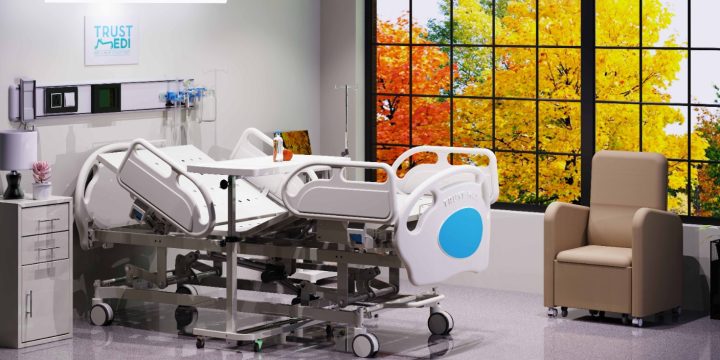
A Hospital Bed Manufacturer is the party responsible for designing, building, testing, and supporting the bed—not just selling it.

This guide shows what to verify before you sign a contract, especially for Hospital Bed For Healthcare Projects—prepared by trust medi.

Why Choosing The Right Hospital Bed Manufacturer Is Critical?

In healthcare projects, beds touch almost everything: patient handling, fall prevention routines, infection-control workflows, and nursing efficiency. A poor decision usually shows up in three ways:

  • Safety risk: Bed system gaps, side-rail compatibility, and mattress matching can create entrapment hazards. The FDA issued guidance specifically to reduce life-threatening entrapment risks and outlines assessment and dimensional recommendations for hospital bed systems. (fda.gov)
  • Operational pain: If a bed breaks and parts aren’t available, rooms go out of service and staff improvise.
  • Project risk: Large rollouts depend on predictable lead times, documentation, and consistent batches. WHO notes that technical specifications should be considered before purchase to ensure quality, safety, and proper planning. 

Choosing the right manufacturer reduces total cost, delays, and “hidden” risk that appears after commissioning.

What Is A Hospital Bed Manufacturer?

A Hospital Bed Manufacturer is the company that actually produces the bed—typically controlling design, welding/structure, coating, electrical integration (if applicable), testing, packaging, and quality control.

A strong manufacturer can usually provide:

  • Detailed drawings and data sheets
  • Batch traceability and QC records
  • Spare parts lists and service manuals
  • Test evidence aligned with Hospital Bed Quality Standards
  • Clear warranty and after-sales structure

In many tenders, they may also be a Medical Furniture Manufacturer or even a Medical Equipment Manufacturer depending on their product scope.

Manufacturer Vs Supplier Vs Distributor

This difference matters because accountability changes.

  • Manufacturer: Builds the product, owns design and production responsibility.
  • Supplier: Sells and delivers; could be the manufacturer or a third party. A supplier may also bundle beds with broader Hospital Furniture For Hospitals packages.
  • Distributor: Represents brands in a region, often handling inventory and service coordination.

For healthcare projects, you often work with both:

  • A verified Hospital Bed Factory (the source)
  • A local Hospital Bed Supplier / Medical Equipment Supplier (delivery, installation, service)

Your contract should clearly state who is responsible for: compliance documents, warranty claims, spare parts availability, and on-site support.

Key Factors To Consider When Choosing A Manufacturer

When you compare options, don’t start with price. Start with risk control.

Core factors:

  1. Quality system and documentation discipline
  2. Proof of safety and performance testing
  3. Production capacity and lead time reliability
  4. Spare parts and after-sales support
  5. Project experience (real references)
  6. Export readiness (if cross-border)
  7. Clarity in specs and change control

WHO guidance emphasizes the value of technical specifications to improve access to safe, effective devices and support planning and lifecycle management. (World Health Organization)

Manufacturing Quality And Production Capacity

Even a great product design can fail if production isn’t consistent.

What to verify in manufacturing quality:

  • Welding consistency and structural reinforcement points
  • Coating preparation and corrosion resistance
  • Electrical components sourcing (for electric beds)
  • Final inspection steps and functional testing
  • Packaging that prevents damage in long transport

What to verify in production capacity:

  • Monthly output for your bed model(s)
  • Ability to maintain the same parts and specs across batches
  • Lead time under peak load
  • Contingency plans (supplier alternatives, component shortages)

For large Hospital Bed Procurement programs, ask for a phased production schedule tied to your project timeline—then put penalties and acceptance criteria in writing.

Certifications And Compliance Requirements

“Certified” should never be a marketing word in procurement—it should mean verifiable scope, valid certificates, and correct application to your product category.

Common requirements you may see:

  • ISO 13485 (quality management system for medical devices) — ISO describes it as an internationally recognized QMS standard for design and manufacture of medical devices. (ISO)
  • IEC 60601-2-52 (adult medical bed safety and essential performance) — ISO’s listing notes it applies to basic safety and essential performance of medical beds intended for adults. (ISO)
  • Entrapment risk assessment and compatible mattress/rail guidance — FDA’s hospital bed entrapment guidance outlines risk areas and dimensional recommendations. (fda.gov)

If a vendor claims to be a Certified Medical Manufacturer, request:

  • Certificate number, scope, issuing body, validity dates
  • Product test reports (not just a “statement of compliance”)
  • Traceability approach (serial number structure, batch records)

Customization And Project-Based Solutions

Healthcare projects rarely fit “one-size-fits-all.” You may need:

  • Different bed widths/lengths for wards vs ICU
  • Side rail types based on patient profile
  • Accessory compatibility (IV poles, traction, overbed tables)
  • Head/foot boards aligned to your interior design and cleaning protocols
  • Language requirements for labels and user manuals

A capable Hospital Furniture Manufacturer can offer custom finishes and accessory mounting without breaking compliance or delaying production. The key is documented change control: every custom option should have a clear spec sheet and approval process.

Experience In Healthcare Projects

A manufacturer that can supply 50 beds is not automatically ready for 500+ beds across multiple sites.

Ask for evidence of project experience:

  • Similar scale deliveries (bed counts, multi-site)
  • Department mix (wards, ICU, emergency, step-down)
  • Installation and commissioning scope
  • References you can actually contact
  • Photos/videos from real deployments (not stock)

WHO procurement resources stress that proper specs and planning are part of ensuring devices are safe and appropriate for the setting. 

That “setting fit” is exactly where experienced Healthcare Project Suppliers stand out.

Export And Logistics Capabilities

If you’re importing, export capability is not optional—it’s a risk multiplier.

A manufacturer with strong logistics readiness (or a partnered Hospital Bed Exporter) should provide:

  • Export packaging standards (drop protection, humidity control)
  • HS codes and documentation pack
  • Country-specific labeling support (where required)
  • Delivery and insurance terms (Incoterms clarity)
  • Spare parts shipment plan (separate cartons, priority shipping options)

Export failures don’t look like dramatic disasters—they look like beds stuck at customs, missing certificates, damaged goods, and delayed openings.

After-Sales Support And Maintenance

This is where “cheap” deals become expensive.

Minimum after-sales questions:

  • What parts are considered consumables (casters, actuators, control handsets, rails)?
  • What is the typical lead time for spares?
  • Do you offer service training for biomedical teams?
  • Is there a local service partner?
  • Warranty coverage details: what’s included, what voids it, response times

If you’re buying through a Hospital Bed Supplier or Medical Furniture Supplier, confirm whether they hold spare stock locally or rely on factory shipments.

Cost Vs Quality Considerations

Don’t compare bed prices without comparing what you’re actually getting.

A practical way to evaluate:

  • Upfront cost: unit price + accessories + installation + training
  • Running cost: spare parts + downtime + service visits
  • Risk cost: noncompliance, delivery delays, warranty disputes, incompatibility issues

Also consider safety guidance around bed systems. FDA’s entrapment guidance highlights compatibility issues and the importance of assessing openings and components in the full bed system (bed + rail + mattress + accessories). 

That’s why quality isn’t just “strong steel”—it’s system design and documented compatibility.


Common Mistakes When Selecting A Manufacturer

Avoid these frequent buyer traps:

  • Choosing a vendor based on photos and brochures, not test evidence
  • Accepting “ISO certified” without checking scope, dates, and issuing body
  • Not defining acceptance inspection: what you will measure on arrival
  • Skipping mattress compatibility requirements (rail gaps change with mattress thickness) 
  • Over-customizing late in the project (changes create delays and inconsistent batches)
  • Forgetting spare parts and training in the contract
  • Buying through a middle party without confirming who owns warranty responsibility

Checklist For Healthcare Project Buyers

Use this as a quick evaluation sheet for Hospital Bed Procurement:

Manufacturer & factory

  • Confirm factory address, production lines, and capacity
  • Ask for recent batch QC records and inspection steps

Compliance

  • ISO 13485 certificate (scope + validity)
  • Bed standard alignment (e.g., IEC 60601-2-52 where applicable)
  • Entrapment risk approach and documentation 

Product documentation

  • Full datasheets, drawings, user manual, spare parts list
  • Cleaning guidance and chemical compatibility notes

Project readiness

  • Phased delivery plan
  • Installation and commissioning responsibilities
  • Training plan for nursing and biomedical teams

Service

  • Warranty details and response times
  • Local service coverage or partner plan
  • Spare parts stocking strategy

Commercial

  • Clear Incoterms (if import/export)
  • Payment schedule tied to inspection and acceptance milestones

FAQ About Hospital Bed Manufacturers

1) Should I buy directly from a Hospital Bed Factory or through a supplier?
For large projects, many buyers use both: the factory for manufacturing accountability and a regional Hospital Bed Supplier for logistics, installation, and service. Make responsibilities explicit in the contract.

2) What makes a supplier a reliable Healthcare Project Supplier?
Clear specs, documented compliance, predictable delivery, strong installation planning, and real after-sales capacity—not just a low quote.

3) What safety topics must be addressed in bed selection?
At minimum: bed system compatibility (rails + mattress), entrapment risk assessment, and standards-based safety/performance testing. FDA provides detailed guidance focused on reducing life-threatening entrapment risks. 

4) Is ISO 13485 always required?
Not always by law in every country for every bed, but it’s a strong signal of medical-device QMS discipline and is widely used in healthcare purchasing decisions. 

5) What should I include in technical specifications?
Define dimensions, safe working load, height range, rail type, caster specs, accessory compatibility, cleaning requirements, labeling/manual language, and acceptance criteria. WHO emphasizes that technical specifications should be considered before purchase to improve safety and proper planning. 


Choosing the right Hospital Bed Manufacturer is really about protecting your project: stable production, proven compliance, predictable delivery, and service you can rely on after handover. When you verify certifications, demand clear documentation, confirm factory capacity, and lock spare parts and maintenance into the contract, you reduce risk and keep your wards running.

If you’re preparing a tender or upgrading wards, trust medi helps healthcare buyers shortlist a reliable Medical Furniture Manufacturer, coordinate with Healthcare Project Suppliers, and manage Hospital Bed Procurement from specifications to delivery—without surprises. Contact trust medi to review your project requirements and build a manufacturer comparison file you can trust.

Hospital Bed Types Explained: Manual vs Electric vs ICU Beds

Hospital Bed Types Explained: Manual vs Electric vs ICU Beds

Choosing a hospital bed sounds simple until you’re balancing patient safety, nursing workload, infection control, and budget. That’s why Hospital Bed Types Explained: Manual vs Electric vs ICU Beds matters for anyone buying beds for real clinical use.

A hospital bed is more than a frame and mattress. It’s a daily-use tool that affects comfort, mobility, pressure care, and staff efficiency.

In this article, you’ll learn the main Hospital Bed Types, how each one fits different patients and settings, and what to check before you buy by trust medi.

What Are Hospital Bed Types?

Hospital Bed Types usually fall into three practical groups based on how they move and what care level they support:

  • Manual Hospital Beds: adjusted by hand cranks (backrest, leg section, sometimes height).
  • Electric Hospital Beds: motorized adjustments controlled by handset or panel.
  • ICU Hospital Beds: advanced electric beds built for critical care workflows and monitoring.

You may also hear “Patient Bed Types” used in tenders, which can include specialty variants like bariatric beds, pediatric beds, low beds (fall-risk), or long-term care beds. For hospitals and procurement teams, it’s best to classify beds by care level and function first, then add specialty needs.

Why Choosing The Right Hospital Bed Is Important?

Beds are used 24/7, cleaned frequently, and adjusted dozens of times per dayso the wrong choice shows up fast.

Here’s what a “right” bed influences:

  • Fall risk and safe transfers: Bed height and stability affect how safely patients get in and out. Research and hospital guidance often connect bed height and mobility to fall prevention efforts. 
  • Entrapment and side-rail safety: Poor rail design or wrong mattress pairing can create dangerous gaps. Regulators provide guidance to reduce entrapment hazards. 
  • Nursing workload: If staff must crank beds repeatedly, fatigue and time loss are realespecially in high-acuity units.
  • Patient comfort and pressure care routines: Position changes and angles matter for breathing comfort, feeding, and skin care plans.
  • Lifecycle cost: Cheaper beds can cost more through repairs, downtime, and spare parts issues.

This is why hospital beds sit inside broader Healthcare Bed Solutions and Hospital Furniture Beds planning, not just “a furniture purchase.”

What Is A Manual Hospital Bed?

A manual bed is a hospital bed where key positions are adjusted mechanicallyusually with one or more hand cranks. Some models offer:

  • Backrest adjustment
  • Knee/leg section adjustment
  • Height adjustment (not always included)

Manual beds are common when power access is limited, budgets are tight, or patients don’t need frequent repositioning.

Features And Use Cases Of Manual Hospital Beds

Typical Hospital Bed Features in manual models:

  • Simple mechanical articulation (fewer electronics to service)
  • Basic side rails (varies by model)
  • Fixed or limited height range on lower-cost units
  • Standard caster system with brakes

Best-fit use cases:

  • General wards with stable patients
  • Short-stay observation (where staff can manage cranks)
  • Backup inventory for surge capacity
  • Smaller facilities that need reliable basics

Where manual beds struggle:

  • High-turnover units needing frequent height changes
  • Bariatric or high-dependency patients requiring regular repositioning
  • Facilities aiming to reduce staff strain

If you’re comparing Patient Bed Types for mixed use, manual can be practical as a “base layer,” but it’s rarely the best choice for high-acuity care.

What Is An Electric Hospital Bed?

Electric Hospital Beds use motors to adjust bed positions with a handset, pendant, or integrated controls. Most electric beds offer:

  • Backrest up/down
  • Knee/leg section up/down
  • Height up/down
  • Trendelenburg / reverse Trendelenburg (depending on model)

Many facilities prefer electric beds because repositioning becomes quicker and less physically demanding for staff.

Benefits And Applications Of Electric Hospital Beds

Core Hospital Bed Functions that get easier with electric systems:

  • Frequent repositioning for comfort and care routines
  • Safer transfers via height adjustment
  • Faster nursing workflows during rounds

Common settings:

  • Medical-surgical wards
  • Maternity units (depending on local practice and bed type)
  • Post-op recovery areas
  • Long-stay patient rooms where comfort matters daily

Electric models also overlap with Adjustable Hospital Beds in how buyers describe them. In procurement specs, be precise: define which sections are adjustable, the height range, and whether the bed has tilt functions.

One more point: because electric beds are medical electrical equipment, safety standards become more relevant. For adult medical beds, IEC 60601-2-52 is widely referenced for safety and essential performance requirements. (ISO)

What Is An ICU Hospital Bed?

ICU Hospital Beds are advanced electric beds built for critical care demands. They typically support:

  • Complex positioning and micro-adjustments
  • Higher load ratings (varies by model)
  • Integration with accessories (vents, monitors, pumps)
  • Features that support respiratory care, turning protocols, and rapid access in emergencies

These beds are designed for high-risk patients where small positioning changes can matter a lot.

Key Features Of ICU Hospital Beds

Typical ICU-grade Hospital Bed Features include:

  • Wider height range (including very low positions for fall-risk protocols)
  • Advanced side-rail systems designed with entrapment risk in mind
  • CPR quick-release (mechanical or electronic) for rapid flat positioning
  • Built-in scale (on some models)
  • Bed exit alarms / patient monitoring options (model dependent)
  • X-ray cassette compatibility (some models)
  • Better accessory mounting for ICU workflows

Entrapment safety is a serious topic in bed systems. Regulatory guidance focuses on reducing life-threatening entrapment hazards and identifies risk areas and dimensional criteria around rails, mattress interfaces, and openings. 

Manual vs Electric vs ICU Beds Comparison

Here’s a practical comparison buyers can use during evaluation:

  • Adjustment method
    • Manual: hand cranks
    • Electric: motors + handset
    • ICU: advanced motors + expanded functions
  • Best for
    • Manual: low-acuity, limited repositioning
    • Electric: general inpatient care, frequent adjustments
    • ICU: critical care, high dependency patients
  • Staff workload
    • Manual: higher physical effort
    • Electric: reduced effort, faster routines
    • ICU: lowest effort with specialized controls
  • Safety and risk management
    • Manual: depends heavily on rail design and procedures
    • Electric: better positioning control; still needs rail/mattress matching
    • ICU: typically strongest set of safety-focused features (still depends on model)
  • Cost
    • Manual: lowest upfront
    • Electric: mid-range
    • ICU: highest upfront, often best fit for critical workflows

Which Hospital Bed Type Is Best For Hospitals And Clinics?

It depends on your patient mix, staffing, and how often beds are repositioned.

For hospitals (inpatient wards):

  • A blend often works best: electric beds for most wards, ICU beds for critical care, and a smaller pool of manual beds for backup and low-acuity use.
  • If your project is primarily Hospital Bed For Hospitals, standardization mattersfewer models make training, spares, and maintenance easier.

For clinics:

  • Many clinics don’t need full inpatient beds, but some do (day surgery, recovery, observation, dialysis, specialty centers).
  • If you need Hospital Bed For Clinics, electric models usually make more sense than manual because clinics rely on fast turnover and safe transfers with limited staff per patient.

A reliable Hospital Bed Supplier should help you map bed types to departments rather than pushing one model for everything.

Hospital Bed Specifications And Safety Standards

When tendering, define your Medical Bed Specifications clearly so suppliers can’t substitute lower-grade options.

Key specifications to include:

  • Safe working load and patient weight limit
  • Mattress platform dimensions and mattress compatibility rules
  • Height range (minimum and maximum)
  • Backrest and knee angle ranges
  • Tilt functions (if needed): Trendelenburg/reverse
  • Caster size, brake type, steering function
  • Side rail type and latching reliability
  • Cleaning compatibility (chemicals, contact times)

On safety standards:

  • IEC 60601-2-52 is commonly referenced for adult medical beds’ basic safety and essential performance.
  • Entrapment risk is addressed through guidance that identifies hazardous openings and recommends dimensional criteria for bed systems and accessories. 

Also include documentation requirements (manuals, spare parts list, warranty terms, service network). For large purchases, ask for proof of conformity and test evidence aligned to the standards your facility requires.

Factors Affecting Hospital Bed Selection

A realistic selection checklist (the stuff that actually decides satisfaction after delivery):

  1. Patient acuity and mobility
    • High dependency patients usually justify electric or ICU beds.
  2. Nurse-to-patient ratio
    • Lower staffing capacity increases the value of motorized repositioning.
  3. Room size and layout
    • Check turning radius, side clearance, and headwall equipment.
  4. Cleaning intensity
    • Choose finishes and designs that survive frequent disinfection without peeling or cracking.
  5. Power and backup readiness
    • Electric and ICU beds need reliable power planning (and sometimes battery backup).
  6. Service and spare parts
    • A bed is only “high quality” if you can keep it running.
  7. Standardization goals
    • Too many models create training and spare parts chaos.

Your choice of Hospital Bed Manufacturer matters here, not just the model namebuild quality and long-term support vary widely.

Common Mistakes When Choosing Hospital Beds

These show up again and again in hospital projects:

  • Buying on brochure features instead of clinical workflow
    • A flashy control panel doesn’t help if height range is wrong for transfers.
  • Ignoring mattress compatibility
    • Side rail safety and entrapment risk can change with the wrong mattress thickness or type. 
  • Choosing ICU beds for every ward
    • Overspending reduces budget for mattresses, accessories, and spares that matter daily.
  • Choosing manual beds where staff will crank constantly
    • It increases workload and slows care routines.
  • Not defining the specs tightly
    • Vague tenders lead to substitutions that look similar but perform differently.
  • Skipping training
    • Misuse causes damage and safety incidents faster than most teams expect.

FAQ About Hospital Bed Types

1) Are Electric Hospital Beds always better than manual?
Not always. If patient needs are low and repositioning is rare, Manual Hospital Beds can work well. If staff adjust beds often, electric usually wins on safety and workflow.

2) Do ICU Hospital Beds follow different standards?
Many ICU beds still fall under recognized medical bed safety frameworks (often referencing IEC requirements), but the key is whether the specific bed is tested and documented for the functions you’re buying. 

3) What’s the most important line in Medical Bed Specifications?
Safe working load + height range + rail/mattress compatibility. Those three affect daily safety and usability the most.

4) What should I request from a Hospital Bed Supplier before purchase?
Datasheets, test/conformity documentation, warranty terms, preventive maintenance plan, spare parts price list, and delivery/installation scope.

5) How do we reduce bed-related entrapment risk?
Follow recognized entrapment guidance, evaluate rail design and latching, and verify mattress fit and thickness for the bed system in use. 


The best bed choice is the one that matches your care level: manual beds for low-acuity basics, electric beds for most inpatient rooms, and ICU beds where critical workflows demand advanced control and safety. When you compare Hospital Bed Types with clear specs, you protect patients, reduce staff strain, and avoid expensive replacements.

If you’re sourcing for a new ward, a clinic upgrade, or a full facility rollout, trust medi can support you with Healthcare Bed Solutions from defining Medical Bed Specifications to selecting the right Hospital Bed Manufacturer and arranging supply through a dependable Hospital Bed Supplier. Contact trust medi now to build a bed shortlist that fits your departments, budget, and safety requirements.

Complete Guide to Medical Furniture for Hospitals and Clinics

Complete Guide to Medical Furniture for Hospitals and Clinics

What makes a hospital room feel “ready for patients” the moment you walk in? A big part of the answer is Complete Guide to Medical Furniture for Hospitals and Clinics—the right beds, carts, seating, storage, and work surfaces built for constant use and strict cleaning.

In simple terms, medical furniture is the functional furniture used to examine, treat, move, and support patients and staff in healthcare spaces.

In this guide, you’ll learn what counts as medical furniture, how hospital needs differ from clinic needs, what to buy first, what standards matter, and how to source safely—brought to you by trust medi.

What Is Medical Furniture?

Medical furniture includes non-powered and powered items designed for clinical workflows, patient comfort, and infection-control routines. It’s not “regular furniture in a hospital.” It’s built for frequent disinfection, heavy loads, safe patient handling, and long duty cycles.

Common examples:

  • Hospital beds (manual or electric), stretchers, trolleys
  • Examination couches, procedure tables, treatment chairs
  • Bedside cabinets, overbed tables, wardrobes
  • Medical carts, instrument trolleys, IV stands
  • Waiting-area seating, staff chairs, workstations
  • Storage cabinets (clean/dirty separation), shelving systems

In purchasing documents you’ll often see it grouped under Healthcare Furniture Solutions or Healthcare Facility Furniture, and it may be supplied alongside Medical Equipment For Healthcare Facilities by the same vendor.

Why Medical Furniture is important ?

أثاث طبي

Medical furniture affects outcomes more than many buyers expect—because it touches safety, speed, and hygiene every hour of every day.

Key reasons it matters:

  1. Infection control you can actually maintain
    Furniture surfaces get cleaned constantly. Guidance on environmental cleaning emphasizes high-touch surfaces and frequent cleaning/disinfection routines in patient-care areas. (CDC)
  2. Patient handling and fall prevention
    Stable beds, proper side rails, safe brakes, and predictable height adjustment reduce incidents during transfers.
  3. Workflow and staff efficiency
    The right cart layout, storage zoning, and department-specific setups save time and reduce errors—especially in ER, ICU, and OR support areas.
  4. Total cost control
    Durable frames, quality casters, and tested coatings last longer and reduce downtime. Cheap items often “cost twice” through repairs and replacements.

If you’re buying Medical Furniture For Hospitals or Medical Furniture For Clinics, think of it as infrastructure, not décor.

Difference Between Hospital And Clinic Furniture

Hospitals and clinics share many furniture categories, but the duty cycle, risk profile, and standard requirements differ.

Area Hospitals Clinics
Usage intensity 24/7, multiple shifts Usually daytime peaks
Patient acuity Higher (ICU/ER/inpatient) Lower (outpatient focus)
Cleaning frequency Very high, strict protocols High, but fewer “high-risk zones”
Mobility needs More stretchers, transport, large carts More compact carts, exam/treatment chairs
Space planning Departments + isolation zones Smaller rooms, faster turnover
Typical sourcing Often large tenders Smaller batches, quicker replenishment

This is why Clinic Furniture Solutions are often about compact layouts and patient flow, while hospitals may need a broader range of Hospital Furniture Types and more complex specs.

What Is the Types Of Medical Furniture Used In Hospitals?

Hospitals typically require a full spectrum of furniture across inpatient care, critical care, diagnostics, and support services.

Major categories of Hospital Furniture Types:

  • Patient room essentials: hospital beds, bedside lockers, overbed tables, patient chairs, visitor seating
  • Transport and movement: stretchers, transfer trolleys, wheelchairs, IV poles
  • Clinical work: medication carts, procedure trolleys, instrument tables, nursing workstations
  • Storage and logistics: clean supply cabinets, linen carts, shelving, utility carts
  • Isolation/cleanability-focused items: seamless surfaces, minimal joints, easy-to-disinfect upholstery options
  • Specialty furniture: ICU beds, bariatric solutions, recliners for dialysis/infusion, neonatal bassinets (as applicable)

For electrically operated medical beds, international safety requirements exist (for example, IEC 60601-2-52 covers safety and essential performance for certain medical beds). (ISO)

Top Essential Medical Furniture For Clinics

Clinics aim for fast patient turnover, easy cleaning, and comfort—without the footprint of a hospital.

A practical “buy-first” list for Medical Furniture For Clinics:

  1. Examination couches / exam tables (height options, paper roll holder, easy-clean upholstery)
  2. Treatment chairs (for injections, minor procedures, ENT/derm setups)
  3. Clinical carts (medication cart, dressing cart, emergency cart depending on services)
  4. Storage cabinets (lockable, clean/dirty zoning, sharps/consumables separation)
  5. Waiting-area seating (durable, cleanable, stable—public and lounge seating standards can apply) 
  6. Reception and nurse station desks (wire management, privacy panels where needed)
  7. Step stools, instrument stands, IV poles (small items that keep rooms functional)

Many clinics source these through a single Medical Furniture Supplier or a combined Hospital Equipment Supplier to simplify ordering and spare parts.

What Is the Materials And Durability Standards In Medical Furniture?

أهمية الأثاث الطبي

أهمية الأثاث الطبي

Materials decide how long furniture survives aggressive cleaning and heavy use.

Common materials (and what they’re good for):

  • Powder-coated steel: strong frames, good corrosion resistance when coating is high quality
  • Stainless steel (selected grades): excellent for wet areas, CSSD support spaces, procedure zones
  • Aluminum: lighter frames; useful for mobility but needs proper structural design
  • High-pressure laminate (HPL) / compact laminate: worktops, cabinetry fronts; check edge sealing
  • Medical-grade upholstery (vinyl/polyurethane): cleanable, fluid-resistant; verify seam construction
  • Engineering plastics: bumpers, handles, corner guards; good for impact zones

Durability isn’t only the material—it’s testing. Standards and guidance exist for furniture performance under cleaning and disinfecting exposure (healthcare-focused cleanability guidance is a common benchmark).

When you review Medical Furniture Manufacturing specs, ask about:

  • Static and dynamic load testing
  • Caster lifecycle and brake reliability
  • Coating thickness, scratch resistance, chemical resistance
  • Upholstery seam integrity and fluid ingress prevention

Safety And Hygiene Requirements

Medical furniture sits inside infection-control routines, so design details matter.

What to look for:

  • Smooth, non-porous, easy-to-wipe surfaces with minimal seams and crevices
  • Cleanable joints and protected fasteners (avoid exposed threads in splash zones)
  • Rounded corners to reduce injury risk and improve wipe coverage
  • Chemical resistance against commonly used disinfectants (ask for a compatibility list)
  • Repairability—torn upholstery should be replaceable quickly

Health authorities emphasize the importance of cleaning/disinfecting high-touch surfaces more frequently in patient-care areas.
Also, guidance notes that upholstered furniture may be acceptable in general areas, but integrity matters—tears and damage should be repaired, and higher-risk areas may minimize upholstery. 

Compliance And Certifications For Medical Furniture

“Certified” can mean many things, so tie compliance to what you buy.

Common compliance buckets:

  • Quality management at the manufacturer level (often ISO-based systems; verify scope and validity)
  • Product safety/performance standards for specific items (especially powered beds, operating tables, etc.)
  • Cleanability and chemical-resistance testing for healthcare environments
  • Material emissions / indoor air quality for public areas (useful for waiting areas and wards)

For example, IEC 60601 series standards are widely recognized for medical electrical equipment; certain hospital furniture items that include electrical systems (like some beds or operating tables) may fall into that realm. 

If your project includes imports/exports, ensure documentation is ready for customs and tenders—this is especially relevant when working with a Medical Furniture Exporter.

Choosing The Right Medical Furniture Manufacturer

Picking a Hospital Furniture Manufacturer should feel like selecting a long-term partner, not a one-time seller.

A smart evaluation checklist:

  • Proven experience supplying similar facilities (bed capacity, specialties, climate conditions)
  • Clear drawings, data sheets, load ratings, and cleaning instructions
  • Spare parts plan (casters, actuators, side rails, upholstery panels)
  • Production consistency: batch tracking, QA records, incoming material control
  • Real references: hospitals/clinics you can speak to
  • After-sales support and warranty terms written clearly

If a supplier acts like a box-mover and can’t answer technical questions, treat that as a warning sign especially for large orders under Medical Furniture Procurement programs.

Factors Affecting Medical Furniture Quality

Quality shows up in small details that get punished by daily use.

What drives Medical Furniture Quality:

  • Frame design (weld integrity, reinforcement points, anti-rust preparation)
  • Coatings and finishing (uniform thickness, no sharp edges, good adhesion)
  • Hardware and fasteners (locking reliability, corrosion resistance)
  • Casters (diameter, bearing quality, brake performance on different floors)
  • Upholstery (sealed seams, foam density, tear resistance)
  • Fit and alignment (drawers that don’t sag, doors that stay aligned)

Ask for test reports when possible, especially for public seating and high-load items. Industry furniture standards exist to verify safety and durability. (bifma.org)

Medical Furniture For Different Hospital Departments

Different departments punish furniture in different ways, Matching specs to the department prevents waste.

Department Key furniture needs What to prioritize
ER stretchers, procedure trolleys, crash carts, fast-clean seating mobility, brake reliability, wipeability
ICU ICU beds, bedside cabinets, staff work surfaces electrical safety (if applicable), load ratings, cable management
OR / Procedure instrument trolleys, stainless worktables, storage corrosion resistance, seamless design
Wards beds, overbed tables, patient + visitor chairs comfort + durability, easy cleaning
Outpatient exam tables, treatment chairs, stools compact footprint, quick-turn cleaning
Pharmacy storage cabinets, medication prep surfaces organization, security, chemical resistance
CSSD support stainless racks/tables corrosion resistance, drainage-friendly design

This is where a supplier offering complete Healthcare Furniture Solutions can reduce mismatches and simplify maintenance.

Procurement Tips For Hospitals And Clinics

Practical steps that protect your budget and your timeline:

  1. Write specs based on use, not appearance
    Describe loads, cleaning chemicals, duty cycle, caster requirements, and room constraints.
  2. Standardize where you can
    Same caster models, same upholstery grades, same cabinet modules = easier spares.
  3. Ask for samples or a pilot room
    Put one ward or one clinic room into real use before signing a full rollout.
  4. Lock the spare parts list in the contract
    Include a minimum spare kit per X units.
  5. Confirm packaging and shipping details early
    Important when sourcing through a Hospital Equipment Supplier or dealing with export lead times.
  6. Train staff on basic use and cleaning
    Many “product failures” are actually misuse or wrong chemical exposure.

Medical Furniture For Large Healthcare Projects

Large projects (new hospitals, expansions, multi-site clinic networks) need a tighter approach.

What works well:

  • Early coordination between design, biomedical, infection control, and procurement
  • A master list grouped by department, room type, and quantities
  • Phased delivery and installation plan (storage space is always smaller than you think)
  • Factory inspection checkpoints for critical items
  • Document control: test reports, user manuals, cleaning instructions, warranty certificates

This is also where Medical Furniture Manufacturing capacity and consistency matter most, A reliable Medical Furniture Supplier should show you how they scale without quality drop.

Common Mistakes When Sourcing Medical Furniture

Avoid these expensive traps:

  • Buying “home/office grade” seating for waiting areas and expecting it to survive disinfectants
  • Ignoring caster specs (tiny casters fail fast on rough floors and ramps)
  • Choosing upholstery that looks nice but can’t handle your cleaning agents
  • Ordering different models for every department without a spare parts strategy
  • Skipping dimensional checks (doors, lifts, corridors, bed turns, elevator sizes)
  • Selecting a vendor without verifying after-sales support, installation, and local service coverage
  • Treating Medical Furniture Procurement as “lowest price wins” instead of “lowest lifecycle cost”

FAQ for Medical Furniture

1) Is medical furniture the same as medical equipment?
Not exactly. Furniture supports care delivery (beds, carts, cabinets), while equipment includes diagnostic/therapeutic devices. Many projects bundle them under Medical Equipment For Healthcare Facilities, so clarify the scope.

2) What should I request from a manufacturer before purchase?
Data sheets, drawings, load ratings, cleaning instructions, warranty terms, spare parts list, and (when available) test reports aligned with relevant standards. 

3) Can clinics use “hospital-grade” furniture?
Yes, and many do for critical items like exam tables and carts. The decision depends on volume, services, and cleaning intensity.

4) How do I check if furniture is easy to clean?
Look for smooth surfaces, sealed seams, minimal gaps, and documented cleaning/disinfectant compatibility. Guidance exists on cleaning/disinfection steps and high-touch surface focus. 

5) Do I need an exporter?
If you’re buying across borders, a Medical Furniture Exporter can handle documentation, packaging standards, and shipping coordination often reducing delays.


Buying medical furniture is a safety decision, a workflow decision, and a long-term cost decision—all at once. When you match the right Hospital Furniture Types to each department, verify cleanability and durability, and choose a dependable Hospital Furniture Manufacturer, you end up with furniture that lasts and care spaces that run smoothly.

If you’re planning a new facility, upgrading departments, or launching a multi-site rollout, trust medi can support you with Healthcare Furniture Solutions, sourcing, and end-to-end Medical Furniture Procurement—from specifications to delivery. Reach out to trust medi today to build a quote list that fits your hospital or clinic needs without wasted spend.