
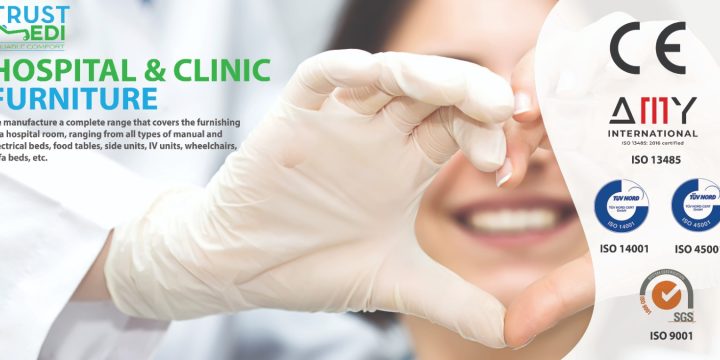
A delayed hospital opening can start with something as “simple” as a missing certificate on a patient bed shipment.
Hospital Furniture for Export: Compliance, Quality, and Logistics Explained means you can export hospital furniture safely when your products meet the destination’s regulations, follow recognized standards, and are shipped with the right packaging and documents.
In this guide you’ll learn what export-ready hospital furniture looks like, which standards and certifications matter, and how to plan packaging, shipping, and customs—brought to you by trust medi.
If you’re planning a full fit-out for a hospital or clinic, start with Complete Guide to Medical Furniture for Hospitals and Clinics.
What Is Hospital Furniture for Export?
Hospital Furniture Export is the process of manufacturing, preparing, documenting, and shipping hospital-use furniture across borders for hospitals, distributors, or project contractors. It often overlaps with Medical Furniture Export, and sometimes sits under a wider scope that includes Medical Equipment Export and Healthcare Equipment Export.
Typical export items include:
- Hospital beds (manual and electric), stretchers, and trolleys
- Examination couches, treatment tables, and bedside cabinets
- Overbed tables, IV stands, ward screens, and patient chairs
- Nurse stations, storage systems, and stainless-steel clinical furniture
A Hospital Furniture Manufacturer exporting internationally is expected to prove safety, traceability, consistent production quality, and correct labeling—especially when products are considered medical devices in the destination market.
Before you shortlist suppliers or submit a tender, use the checklist in How to Choose the Right Hospital Bed Manufacturer for Healthcare Projects.
Need Reliable Medical Furniture?
Explore Trust Medi’s product range for hospitals and clinics.
Why Compliance Is Critical In Medical Furniture Export?
In Medical Furniture Export, compliance is not “paperwork after production.” It is what determines whether your shipment clears customs, gets accepted by hospital engineering teams, and can be used without liability risk.
Here’s what can happen when Healthcare Export Compliance is weak:
- Shipments held at customs for missing declarations, labels, or registrations
- Project delays because tenders require specific standards and test reports
- Warranty disputes because packaging or handling instructions were unclear
- Rejection by hospital infection control teams due to material or cleaning concerns
If you’re supplying Medical Furniture For International Markets, compliance also protects you: it reduces recalls, disputes, and reputational damage, and helps you bid for larger hospital tenders and Hospital Furniture For Projects.
For basic elevation needs without added complexity, the Half Fowler patient bed (MHB-01) fits well in general wards and recovery areas.
International Standards For Exporting Hospital Furniture
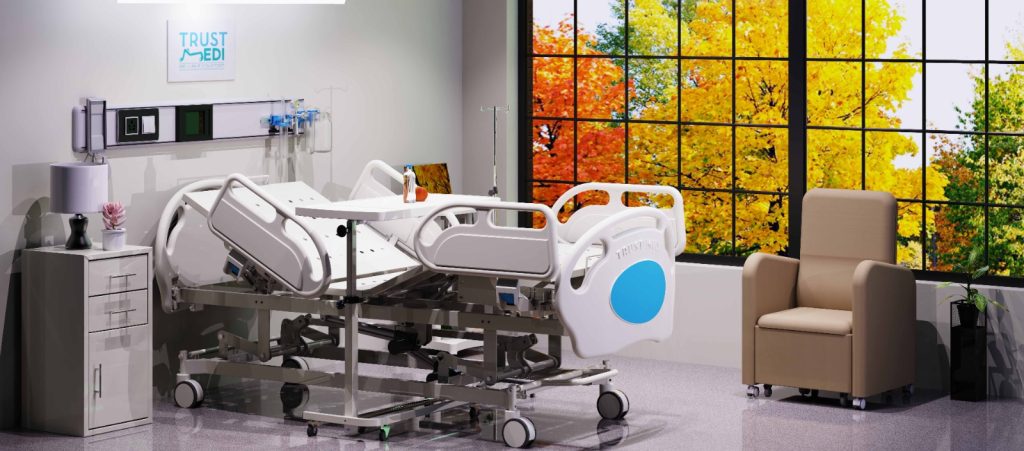
International buyers often expect alignment with well-known standards, even when local rules differ.
Key standards commonly referenced in export programs include:
- ISO 13485 for quality management systems used by medical device manufacturers (frequently requested when furniture is classified as a device or accessory). (ISO)
- ISO 14971 for medical device risk management principles (useful when your furniture has hazards such as entrapment points, moving parts, or electrical risks in powered beds). (ISO)
- EU MDR (Regulation (EU) 2017/745) when selling into the EU market for items regulated as medical devices, including conformity assessment, CE marking, UDI obligations, and importer/distributor responsibilities. (EUR-Lex)
- Country or region guidance that influences procurement expectations (for example, WHO quality and safety considerations used in procurement and donations programs). (World Health Organization)
Important note: not all hospital furniture is regulated the same way everywhere. Some destinations treat certain furniture as general products; others classify items like hospital beds (especially powered beds), stretchers, and accessory components as medical devices. Your export plan should assume the stricter interpretation until confirmed.
Quality Requirements For Export Medical Furniture
Buyers don’t only ask “does it work?” They ask “will it still work after years of cleaning, heavy use, and frequent movement?”
Practical Medical Furniture Quality expectations usually include:
- Material integrity
- Corrosion resistance for metal parts (especially in coastal or high-humidity regions)
- Durable powder coating or stainless steel finishes suitable for clinical environments
- Cleanability and infection control
- Smooth surfaces where possible, minimal dirt traps, compatible with common disinfectants
- Safety and ergonomics
- Load rating clearly stated and verified
- Side-rail safety, pinch-point control, stable casters with brakes
- Consistency from batch to batch
- Same components, same tolerances, same performance—critical for multi-site projects
- Spare parts and after-sales readiness
- Hospitals often require spare-part availability and service documentation
If you present quality only as “good materials,” you’ll lose to exporters who present quality as testable evidence (reports, traceability, and inspection records).
Need Help Choosing Medical Furniture?
Talk to Trust Medi — we’ll help you pick the right options for your hospital or clinic.
Certifications Needed For Medical Furniture Export
Certifications depend on product type and destination. A simple bedside cabinet may need far less than an electric hospital bed with motors and control systems.
Common certification and documentation buckets:
- Quality management: ISO 13485 is widely recognized for medical device QMS and often requested by buyers. (ISO)
- Risk and safety evidence: documented risk controls aligned with ISO 14971 concepts. (ISO)
- Market access marks: CE marking under EU MDR where applicable. (EUR-Lex)
- Country-specific compliance: UK market requirements (UKCA/CE acceptance and labeling obligations) and local importer/responsible person details where required. (GOV.UK)
A useful way to think about it: certifications are rarely “nice to have” in tenders. They’re usually pass/fail.
Packaging And Protection For Medical Equipment
Export success can be ruined by bad packaging. Even perfect products can arrive scratched, bent, or contaminated.
For Medical Equipment Shipping and furniture export packaging, focus on:
- Protection strategy
- Foam blocking, corner protection, anti-scratch films, moisture barriers
- Separate packing for accessories and fasteners to avoid transit damage
- Crate compliance
- If you use wood packaging, many countries require compliance with ISPM 15 treatment and marking rules to prevent pest transfer. (Welcome at ISPM-15.com)
- Humidity and corrosion control
- Desiccants, VCI materials (when relevant), sealed bags for sensitive parts
- Drop and vibration reality
- Assume forklifts, stacking, long road legs, and container vibration
If your product includes batteries (some powered systems, remotes, or tracking devices), you must also consider air/sea dangerous goods requirements and proper declarations when applicable. IATA provides battery shipping guidance tied to DGR rules. (IATA)
Logistics And Shipping Considerations
Hospital Furniture Logistics is where costs and timelines are won or lost. Furniture is bulky, sometimes heavy, and often shipped to time-critical sites.
Key decisions:
- Incoterms selection
- Decide who owns risk and cost at each stage (EXW, FOB, CIF, DAP, DDP, etc.). Incoterms are maintained by the ICC. (ICC – International Chamber of Commerce)
- Mode of transport
- Sea freight for volume and cost efficiency
- Air freight for urgent project gaps or small consignments
- Container planning
- Loading plan, stacking limits, protective dunnage, and moisture control
- Documentation accuracy
- Packing list must match reality (weights, dimensions, serials if used)
- Clear product descriptions to reduce customs disputes
For sea shipments that contain regulated goods (for example, certain batteries or chemicals like cleaning agents shipped with the product), the IMO’s IMDG framework is the reference point. (International Maritime Organization)
In OB/GYN rooms where comfort and adjustability matter, an adjustable gynecology examination bed helps streamline examinations while improving the patient experience.
Export Regulations For Different Countries
Medical Furniture Export Regulations vary, and you should treat them as part of your quote—not something to “figure out later.”
Examples of what changes by country:
- Whether the product is classified as a medical device, accessory, or general furniture
- Whether local representation is required (importer, authorized representative, responsible person)
- Label language rules, registration rules, and documentation formats
- Mandatory conformity marks (CE/UKCA) where applicable
For the EU, MDR sets out obligations across manufacturers, importers, and distributors and ties compliance to CE marking and documentation requirements. (EUR-Lex)
For Great Britain, official guidance explains when UKCA/CE marking is acceptable and what labeling details are required (including responsible person details when applicable). (GOV.UK)
For Saudi Arabia, SFDA publishes importation and shipment clearance requirements for medical devices/supplies. (الهيئة العامة للغذاء والدواء)
Quality Control Before Export
A strong exporter treats QC as a release gate, not a checklist.
A practical pre-shipment quality plan:
- Incoming inspection (critical components, coatings, fasteners, casters)
- In-process checks (weld integrity, alignment, torque checks, moving-part clearance)
- Final functional testing
- Brakes, height adjustment, side rails, load checks (as relevant)
- Label and document verification
- Correct model codes, country labels, warnings, cleaning instructions
- Packaging audit
- Confirm packing method matches your approved packing standard and ISPM 15 crates are correctly marked if used (Welcome at ISPM-15.com)
This is also where you reduce warranty pain: you record results, photos, serials (when applicable), and packing condition before pickup.
For higher-traffic environments, a steel frame wheelchair is often preferred for its robustness and dependable daily handling.
Choosing A Reliable Medical Furniture Exporter
Choosing the right Hospital Furniture Exporter is not only about price, Hospitals and project buyers should judge exporters like they judge clinical suppliers: repeatability, traceability, and support.
A reliable Medical Furniture Supplier should provide:
- Documented quality system (often ISO 13485-based when relevant) (ISO)
- Clear compliance mapping by destination market (EU MDR / UK requirements / local registrations) (EUR-Lex)
- Packaging specs and load plans, not vague promises
- Spare parts policy, service manuals, and escalation contacts
- Proven track record in Medical Furniture For International Markets and multi-site deliveries
Ask for real examples: past packing photos, sample shipment documents, and a standard inspection report template.
If you’re prioritizing durability and stability for daily clinic workload, the gynecology bed with square tubes (GB-0140) is built for consistent use and easy room integration.
Common Challenges In Exporting Hospital Furniture
Exporters and buyers usually face the same few problems:
- Misclassification: furniture treated as general goods in one country, but as regulated medical equipment in another
- Missing or inconsistent documentation: serial lists, declarations, labeling mismatches
- Transit damage: poor crate design or weak moisture control
- Project site complexity: delivery windows, floor access constraints, on-site assembly needs
- Battery or powered-component shipping rules: incorrect declarations cause holds or penalties (IATA)
How To Avoid Export Compliance Issues
Use a simple discipline: build an export file per destination and update it every time rules or your product changes.
A workable compliance routine:
- Create a “destination checklist” that includes labeling, language, marks, importer details, and document set
- Keep technical and quality documents controlled (versioning matters)
- Align Incoterms and contract terms so responsibilities are not “assumed” (ICC – International Chamber of Commerce)
- Use pre-shipment document review: customs hates inconsistencies more than it hates paperwork
- When shipping powered items, validate battery rules early with your forwarder and required declarations (IATA)
If a buyer wants speed, don’t skip compliance—standardize it. Standardization is what makes speed safe.
If you want a mobility option that looks as good as it performs, this stylish patient wheelchair fits well in clinics that care about both usability and presentation.
Export Solutions For Healthcare Projects
Large Hospital Furniture For Projects needs more than product supply. It needs coordination.
Export solutions that reduce risk on healthcare projects:
- Project-based SKU mapping: one master list that ties tender specs to final models and accessories
- Phased shipping: ship install-critical items first, then wards, then reserves/spares
- On-site assembly kits: labeled cartons per room/ward to reduce install time
- Training and handover pack: cleaning guidance, user manuals, spare parts list, maintenance schedule
- Document bundle per shipment: so each container clears smoothly without “missing certificate” chaos
This is where an experienced exporter can support hospitals and contractors with fewer surprises at delivery.
For precise patient positioning and easier nursing care, the Full Fowler patient bed (MHB-02) is a practical option for wards that need flexible back and leg adjustment.
FAQ About Medical Furniture Export
1) Is hospital furniture always regulated like a medical device?
No. It depends on the product and the destination rules. Some items are treated as general furniture, while others (especially powered beds or items used directly in patient care) may fall under medical device regulations.
2) What documents do hospitals usually ask for?
Common requests include certificates (when applicable), test reports, cleaning instructions, labeling proofs, packing specs, and a quality inspection report. For EU routes, MDR-related documentation and CE marking evidence may be required. (EUR-Lex)
3) What causes the most delays at customs?
Mismatch between invoice, packing list, and labels; unclear product description; missing country-required certificates; and issues tied to wood packaging or hazardous/battery declarations.
4) Do wood crates need a special mark for export?
Often yes. Many countries require ISPM 15 treatment and marking for wood packaging material. (Welcome at ISPM-15.com)
5) How do I reduce damage risk during shipping?
Use strong internal blocking, moisture protection, correct stacking rules, and packaging audits before pickup. For bulky items, container loading plans matter as much as the crate.
Exporting hospital furniture is straightforward when you treat it as a system: Export Medical Furniture Standards, documented Medical Furniture Quality, correct labeling and certifications, and a shipping plan built for real-world handling. Regulations like EU MDR and market rules like UK labeling expectations shape what “export-ready” means for many buyers. (EUR-Lex)
If you’re sourcing from a proven Hospital Furniture Manufacturer and want fewer delays, fewer surprises, and smoother delivery for your next Healthcare Equipment Export, talk to trust medi—we’ll help you align compliance, packaging, and logistics so your shipment arrives ready for use, not stuck in paperwork.
