
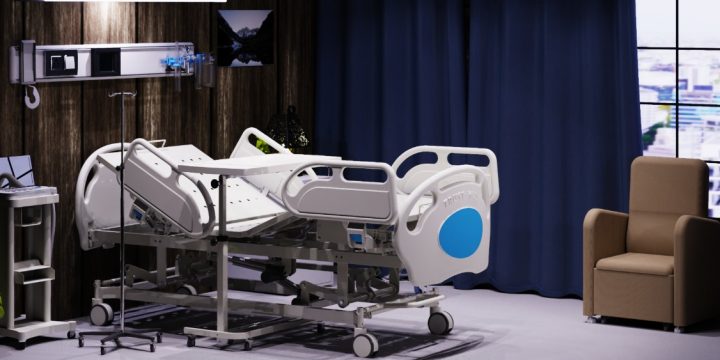
Why do public healthcare buyers reject “good” products? Because in public tenders, compliance beats opinions. Medical Furniture Requirements for Government and NGO Healthcare Projects are strict, documented, and audited—so your furniture must match the spec line by line, not just look right.
In this guide you’ll learn what public projects are, why rules are tighter, the standards and certifications buyers ask for, how tenders describe furniture, and what suppliers must deliver at scale.
If you’re sourcing for a hospital project, this will help you buy with fewer delays and fewer rejected submissions—brought to you by trust medi.
If you’re planning a full fit-out for a hospital or clinic, start with Complete Guide to Medical Furniture for Hospitals and Clinics.
What Are Government And NGO Healthcare Projects?
Government and NGO projects usually mean public money, donor money, or both, spent under formal procurement rules. Examples include:
- New public hospitals, expansions, and refurbishments
- Primary care clinics, mobile units, emergency response facilities
- National programs funded by donors (Global Fund-style structures, development banks, UN agencies)
- Humanitarian deployments where NGOs need quick, standardized setups
These projects often fall under Healthcare Infrastructure Projects, where furniture is not “just furniture.” A bed, trolley, exam couch, or cabinet can be treated as a regulated product, especially when it affects patient safety, infection control, or electrical safety.
Before you shortlist suppliers or submit a tender, use the checklist in How to Choose the Right Hospital Bed Manufacturer for Healthcare Projects.
Why Medical Furniture Requirements Are Strict In Public Projects?

Public buyers tighten requirements for three reasons:
- Patient safety and liability
If a bed collapses, a rail fails, or materials can’t be disinfected, the risk becomes a public issue—not a private complaint. - Audit trails
Government and NGOs must show that selections were fair, documented, and defensible. Many procurement frameworks explicitly focus on technical compliance and evaluation criteria. (popp.undp.org) - Lifecycle cost
They care about maintenance, spare parts, training, and durability because they may run the asset for years with limited replacement budgets.
This is why you’ll see phrases like Hospital Furniture For Public Sector, and why tenders demand clear proof, not marketing.
Need Reliable Medical Furniture?
Explore Trust Medi’s product range for hospitals and clinics.
Key Medical Furniture Standards For Government Projects
Requirements vary by country and donor, but the same “families” of standards show up repeatedly.
1) Medical-bed electrical safety standards
If you supply powered beds or beds with electrical functions, many buyers reference IEC standards. A common one is IEC 60601-2-52, focused on safety and essential performance for adult medical beds. (ISO)
2) Quality management for medical devices
Even when the item looks like furniture, public buyers often want a manufacturer operating a medical-device QMS such as ISO 13485. (ISO)
3) Regional regulatory frameworks
For Europe-linked funding or destinations, CE marking and alignment to the EU medical device framework can matter for certain categories. The legal basis is the EU Medical Device Regulation (EU) 2017/745. (EUR-Lex)
4) Infection prevention and cleanability expectations
Even when no single “furniture standard” is cited, tender language often demands smooth, non-porous, disinfectant-resistant surfaces, sealed joints, and documented cleaning methods—especially in high-risk areas. Public IPC specs commonly reference recognized standards definitions in specialized spaces. (Isomer User Content)
This is where buyers start using terms like Medical Furniture Standards and expect you to prove them in writing.
For basic elevation needs without added complexity, the Half Fowler patient bed (MHB-01) fits well in general wards and recovery areas.
Compliance And Certification Requirements
Public buyers often request “evidence packs” that show Medical Equipment Compliance, What they typically ask for:
- ISO certificates (often ISO 13485; sometimes ISO 9001 as a baseline) (ISO)
- Product test reports (electrical safety, stability, load tests, coatings, fire-retardancy where required)
- Declarations of Conformity (for markets that require them) and traceable labeling
- Warranty terms, preventive maintenance plans, and spare parts commitments
- Training plan for biomedical/maintenance teams (especially for beds and powered items)
For NGO supply, donation-style projects can also require alignment with WHO guidance on ensuring items match needs and can be maintained locally. (World Health Organization)
Use this wording naturally in your documents: Healthcare Project Requirements and Medical Furniture Procurement.
For teams shipping internationally, this covers the essentials: Hospital Furniture for Export: Compliance, Quality, and Logistics Explained.
Medical Furniture Specifications For Tenders
Tenders are not written like brochures. They’re written like checklists. Many Hospital Furniture Tenders include:
- Exact dimensions and tolerances
- Safe working load (SWL) / maximum patient weight
- Materials, coating type, corrosion resistance, and chemical resistance
- Drawer/cabinet configurations, lock requirements, caster types
- Accessories and compatibility (mattresses, IV poles, side rails, monitors, storage bins)
- Cleaning/disinfection compatibility and test evidence
- Packaging requirements and labeling in local language
A tender-ready specification checklist (sample table)
| Category | What buyers often write | What you should submit |
| Performance | SWL, stability, rail strength | Test report + stated SWL + method |
| Materials | Stainless grade / powder coat / antimicrobial claim | Material certs + coating spec + cleaning compatibility |
| Safety | Pinch-point protection, sharp-edge limits, electrical safety for powered beds | Risk/safety statement + IEC report when applicable (IEC Webstore) |
| Documentation | Manuals, maintenance schedule, parts list | Full document pack + revision control |
| Warranty | 1–5 years + service SLAs | Warranty letter + service network plan |
This is where Healthcare Project Furniture becomes a technical deliverable, not a catalog page.
For higher-traffic environments, a steel frame wheelchair is often preferred for its robustness and dependable daily handling.
Volume And Scalability Requirements
Public projects purchase in bulk: dozens of wards, hundreds of beds, entire departments. That’s why buyers ask:
- Production capacity proof (monthly output, lead times, surge capacity)
- Consistency controls (batch traceability, incoming inspection, QA gates)
- Standardization across sites (same model, same spare parts, same manuals)
For Government Hospital Furniture, standardization reduces training time and keeps maintenance manageable.
If you’re prioritizing durability and stability for daily clinic workload, the gynecology bed with square tubes (GB-0140) is built for consistent use and easy room integration.
Quality And Durability Expectations
Public buyers assume hard use: high patient turnover, aggressive disinfectants, frequent movement. They expect:
- Frames that don’t flex or deform under repeated loads
- Weld quality that survives transport and daily stress
- Coatings that resist chipping and hospital-grade chemicals
- Casters that roll smoothly under load and lock reliably
- Upholstery that resists fluids and cracking (and can be replaced)
If you are responding as a Medical Furniture Supplier, write durability in measurable terms: load cycles, coating thickness, salt-spray performance (when requested), and warranty scope.
In OB/GYN rooms where comfort and adjustability matter, an adjustable gynecology examination bed helps streamline examinations while improving the patient experience.
Need Help Choosing Medical Furniture?
Talk to Trust Medi — we’ll help you pick the right options for your hospital or clinic.
Logistics And Delivery For Large Projects
Large projects fail on logistics more than people admit. Common tender needs:
- Staged deliveries by building/ward, aligned to construction milestones
- Site access constraints (elevators, door widths, loading bays, storage rooms)
- Installation, assembly, and commissioning plans
- Packaging that survives long routes and humidity
- Clear Incoterms, customs documentation, and labeling by carton/pallet
For NGOs, last-mile delivery can include remote roads and short setup windows. That’s when NGO Healthcare Equipment planning becomes as important as manufacturing.
Documentation And Approval Processes
Public buyers love documents because documents survive audits. Expect requests like:
- Technical datasheets with model codes
- Country of origin and HS codes
- Certificates (ISO, test reports), plus notarization or legalization in some markets
- User manuals + maintenance manuals + parts lists
- Acceptance test procedure (ATP) for on-site checks
- Training attendance sheets and handover certificates
WHO guidance on medical device provision stresses planning, suitability, and coordination with recipient needs—public projects mirror that mindset even when it’s not “donation.” (World Health Organization)
This is also where phrases like Medical Equipment For Government Hospitals and Medical Equipment For NGOs show up in paperwork, even when the product category is furniture.
Supplier Evaluation Criteria
Most public awards are not “cheapest wins” in the way people assume. Many evaluations combine:
- Technical responsiveness (full compliance to spec)
- Price
- Delivery schedule
- Warranty and service capability
- Experience in similar deployments
- Financial stability and ethical/legal declarations
Procurement frameworks from major institutions emphasize the structure of technical specifications and evaluation approaches. (The World Bank Docs)
If you’re bidding on Medical Furniture For Government Projects, your bid should read like a compliance map: requirement → your response → evidence.
Common Challenges In Government And NGO Projects
Here are issues that repeatedly cause delays or rejections:
- “Equivalent” products without proof
If the tender calls for a standard or feature, “equivalent” must be proven with test data and clear mapping. - Mismatch between site reality and spec
Doors too narrow, power sockets missing, floor slopes, no storage space. Site surveys help. - Documentation gaps
Missing manuals, unlabeled cartons, inconsistent model numbers across documents. - After-sales weakness
No spare parts plan, unclear service points, no training plan. - Changing timelines
Construction delays, funding tranches, emergency reprioritization.
If you want a mobility option that looks as good as it performs, this stylish patient wheelchair fits well in clinics that care about both usability and presentation.
How Manufacturers Meet Public Sector Requirements
Strong manufacturers build compliance into the product and process:
- Design controls and risk thinking (especially for powered beds and safety-critical parts)
- Standardized BOMs for repeatable quality
- Traceability from raw material to finished unit
- Testing routines aligned with recognized standards (for example, IEC 60601-2-52 for adult medical beds where applicable) (IEC Webstore)
- Document control: every manual and datasheet version matches the shipped model
- Field feedback loops: repairs and complaints feed into design improvements
That’s what turns “we can supply” into reliable Hospital Furniture For NGOs and government-scale delivery.
For precise patient positioning and easier nursing care, the Full Fowler patient bed (MHB-02) is a practical option for wards that need flexible back and leg adjustment.
Best Practices For Supplying Medical Furniture To NGOs
NGO projects can move fast, but they still demand discipline. Practical habits that work:
- Start with need-fit, not catalog-fit: confirm clinical workflow, cleaning practice, staffing, and available maintenance. WHO donation guidance stresses matching needs and ensuring maintainability. (World Health Organization)
- Use modular kits: ward kits (beds + lockers + overbed tables) reduce missing items and speed setup.
- Plan consumables and spares: casters, actuators (if powered), rails, handles, bumpers.
- Train simply: a 60-minute session with a checklist, then quick refreshers.
- Document everything: NGOs report to donors; your documents become their proof.
This approach reduces friction in Medical Furniture Procurement and makes audits easier.
FAQ About Medical Furniture For Government Projects
1) Is hospital furniture always considered a “medical device”?
Not always. It depends on function, risk, and local regulation. Powered beds and certain clinical items are more likely to be treated under medical device rules, which is why IEC standards and regulatory frameworks may appear in tenders. (IEC Webstore)
2) What’s the single biggest reason bids get rejected?
Missing or unclear compliance evidence. If the tender asks for proof, submit test reports, certificates, and a requirement-by-requirement compliance table.
3) Do NGOs accept alternatives if the exact model isn’t available?
Sometimes, but only when you show the alternative meets the same need, fits the environment, and can be maintained. WHO guidance emphasizes suitability, planning, and coordination. (World Health Organization)
4) What should a tender submission include besides price?
Datasheets, drawings, certificates, test reports, delivery schedule, warranty terms, spare parts plan, training plan, and after-sales coverage.
5) How do buyers compare suppliers fairly?
They typically score technical compliance first, then compare price and commercial terms using a defined evaluation approach. (The World Bank Docs)
Public healthcare projects reward suppliers who treat furniture like a safety-and-compliance product, not a showroom item. If you’re preparing bids for Medical Furniture For Government Projects or supplying Hospital Furniture For Public Sector programs, focus on standards, documentation, durability, and service readiness—then scale logistics like a real project, not a simple shipment.
If you want help matching tender specs, preparing compliance packs, or planning large deliveries for government and NGO facilities, trust medi can support your procurement from specification to delivery and handover—reach out and share your project list to get started.
